
What Does Prostate Pain Feel Like? A Guide to Recognizing and Managing Discomfort
What if the persistent, nagging ache in your pelvic floor isn't a permanent fixture of your life or a sign that you're headed straight for a surgical suite? It's deeply unsettling when you're dealing with a sensation that's hard to describe but impossible to ignore. You might feel a heavy pressure behind the pubic bone; a sharp, fleeting sting during urination; or perhaps a constant, dull throb that seems to radiate through your lower back. It's completely natural to feel anxious when you don't have a name for your discomfort, especially when clinical medical terms only add to the confusion.
Gaining a clear understanding of what does prostate pain feel like is the essential first step toward reclaiming your daily COMFORT. We believe that managing your health should feel supportive rather than clinical. This guide provides a straightforward breakdown of the sensory signs of prostate issues (identifying exactly what your body is trying to tell you) while offering a sense of hope. You'll discover how to recognize these specific symptoms and explore non-invasive, natural options designed to provide systemic support and lasting RELIEF. Let's move away from the frustration of "waiting it out" and toward a proactive, gentle path for your well-being.
Key Takeaways
- Identify the specific "golf ball" sensation and deep pelvic aches to gain a clearer understanding of what does prostate pain feel like.
- Distinguish between urinary stinging and deep post-activity discomfort to better pinpoint the source of your localized inflammation.
- Learn why common issues like BPH or prostatitis occur and how to address them without the anxiety of invasive clinical procedures.
- Discover how simple dietary adjustments and pelvic floor relaxation techniques can help reduce the pressure of persistent pelvic discomfort.
- Explore the benefits of non-invasive topical support, such as the Natural Prostate Treatment Cream, designed to provide direct and systemic RELIEF.
Defining the Experience: What Does Prostate Pain Feel Like?
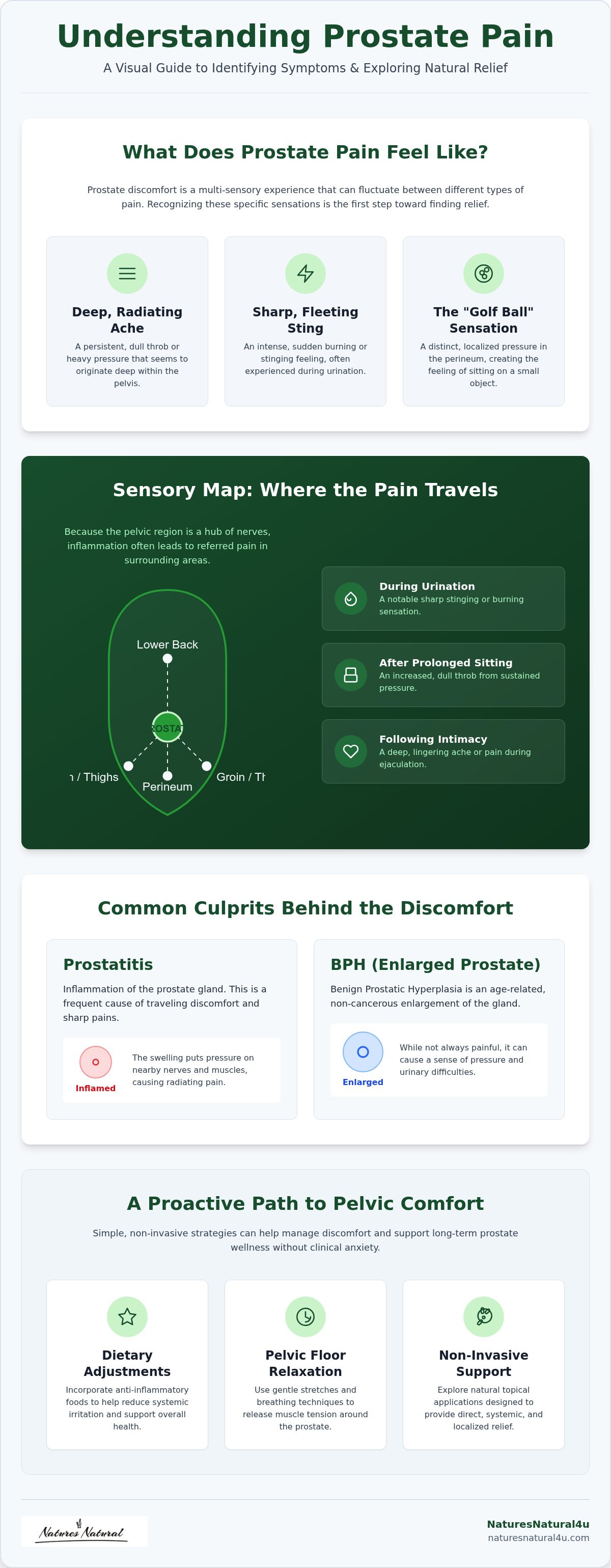
Prostate pain is a multi-sensory discomfort affecting the lower urinary tract and pelvic floor. It often manifests as a deep, radiating ache in the pelvic region, creating a sense of unease that can be difficult to ignore. For many men, this discomfort isn't a constant, unchanging state. Instead, it frequently fluctuates between a sharp, sudden sting and a dull, heavy pressure that feels like a weight in the lower abdomen. Recognizing these shifts is essential for understanding what does prostate pain feel like and how to communicate your experience to a specialist.
The sensations can be quite diverse depending on the underlying cause. While some experience a fleeting prickling feeling, others deal with a persistent throb that makes daily activities feel like a chore. This variety of symptoms often leads to confusion, making it vital to map out exactly where and how the discomfort occurs. By identifying these patterns, you can move from a state of anxiety toward a focused plan for RELIEF and long-term well-being.
To better understand this concept, watch this helpful video:
The "Golf Ball" Sensation and Perineal Pressure
One of the most distinct ways men describe their discomfort is the feeling of sitting on a hard, small object, often likened to a golf ball. This sensation occurs even when you're resting on soft surfaces like a plush armchair or a bed. It's a localized pressure in the perineum (the area between the scrotum and the anus) that stems from the physical location of the prostate gland itself. When the gland is inflamed or swollen, it presses against the pelvic floor muscles, creating that unmistakable feeling of obstruction. Validating this experience is a crucial step in reducing the anxiety that often accompanies pelvic issues; it's a very common signal from the body that the area requires gentle, focused COMFORT.
Radiating Discomfort: Where the Pain Travels
Prostate-related issues rarely stay confined to a single point. Because the pelvic region is a complex hub of nerves, inflammation in the gland often leads to referred pain. This means you might feel a deep ache moving toward your lower back, your groin, or even down into your inner thighs. Conditions like prostatitis are frequently the culprit behind this traveling discomfort. It's easy to mistake these sensations for a simple muscular strain from exercise or a long day on your feet. However, while a muscle pull usually responds to rest and stretching, a deep-seated prostate ache feels more internal and persistent. If you're seeking a non-invasive way to soothe this radiating pressure, our Natural Prostate Treatment Cream is designed to provide localized herbal support directly where it's needed most.
The Sensory Map: Identifying Where and How it Hurts
Understanding what does prostate pain feel like involves observing the specific moments when the body signals distress. It's rarely a static or unchanging sensation. For many, it manifests as a sharp stinging or burning during urination. This isn't just a surface-level irritation; it feels like it's coming from deep within the pelvic floor, often lingering long after you've left the bathroom. These sensations are your body's way of highlighting localized inflammation that requires a gentle, restorative approach.
Sexual health can also be a significant indicator of prostate wellness. Ejaculatory pain is a common sensory marker, often described as a deep, lingering ache that follows intimacy. It can turn a moment of connection into a source of physical stress and anxiety. These symptoms of prostatitis vary in intensity, but they consistently signal that the gland is under strain and needs systemic support.
Your daily routine often dictates the rhythm of the discomfort. If you spend your day behind a desk or driving, you might notice an increased throb after long periods of sitting. This post-sitting ache happens because the weight of the body puts direct pressure on an already sensitive area. At night, this often transitions into a heavy, urgent feeling. It's the kind of pressure that wakes you up multiple times, leaving you feeling exhausted and frustrated by the lack of restorative sleep.
Urinary vs. Deep Pelvic Sensations
It's easy to confuse these feelings with a standard urinary tract infection (UTI). While a UTI often brings a sharp sting at the very tip of the urethra, prostate discomfort is a deep, internal throb. It feels unreachable, as if the source of the pain is tucked away behind the pelvic bone. Understanding these nuances helps in choosing the right path for Enlarged Prostate Treatment and finding a solution that addresses the root cause rather than just the surface symptoms.
When Pain Becomes a "Heavy" Feeling
Sometimes, the pain isn't sharp at all. It's a persistent sensation of fullness or bloating in the lower abdomen. This heaviness can make simple movements feel restricted and take a significant toll on your emotional well-being. Recognizing this heaviness helps you define what does prostate pain feel like in your own life, allowing you to take proactive steps toward wellness. If you're looking for a way to support your system naturally, exploring gentle herbal remedies can be a wonderful place to start your recovery journey.
Common Culprits: Why Your Prostate Might Be Aching
Once you've identified the specific sensations, the next logical question is often about the underlying cause. Understanding the "why" helps demystify the experience and reduces the anxiety that naturally comes with physical discomfort. While every man's journey is unique, most issues stem from a few primary conditions that affect the gland's size or state of inflammation. Knowing these culprits provides a clearer picture of what does prostate pain feel like in the context of your specific health situation.
Prostatitis: The Inflammatory Response
The term Prostatitis refers to an inflammation of the prostate gland. It can be acute, which is often caused by a sudden bacterial infection, or chronic, a long-term condition frequently referred to as chronic pelvic pain syndrome. When the tissues become inflamed, they swell and become hypersensitive. This is exactly why you might experience those sharp stinging or burning sensations during your daily routine. For many, applying gentle, topical support like our Natural Prostate Treatment Cream can help soothe these localized areas, providing much-needed COMFORT without the need for invasive measures.
BPH and the Pressure Principle
Benign Prostatic Hyperplasia (BPH) is the non-cancerous enlargement of the prostate. Think of the prostate as a small doughnut surrounding the urethra, which is the tube that carries urine. As the gland grows, it acts like a "clamp" on that tube. This physical restriction is the reason behind the classic "urge vs. flow" struggle; your bladder feels full, but the exit is narrowed. This constant mechanical pressure contributes significantly to the heavy, dull ache many men describe when asked what does prostate pain feel like. To learn more about how localized care supports these changes, you can explore the Natural Prostate Cream Benefits for a deeper look at non-invasive options.
Beyond these conditions, your lifestyle plays a significant role in how your body manages inflammation. Stress can cause the pelvic floor muscles to tighten, while certain dietary choices may exacerbate systemic swelling. Clinical guidance in 2026 suggests that moving toward a plant-forward, Mediterranean-style diet can help support the immune system in its natural role of managing localized inflammation. By addressing these triggers and supporting your body's natural systems, you can move toward lasting RELIEF and a more vibrant life.
Proactive Steps: How to Manage Prostate Discomfort at Home
Recognizing what does prostate pain feel like is a breakthrough moment for many men. Once you've identified that deep, nagging ache, you can move from a state of worry to purposeful action. Managing discomfort at home starts with small, intentional shifts in your daily habits that prioritize systemic calm and localized relief. These steps are designed to be gentle, non-invasive, and easy to integrate into your existing routine.
Dietary adjustments are a powerful tool for managing inflammation. New clinical guidance from 2026, often called the "Prostate Protocol," emphasizes a plant-forward, Mediterranean-style diet low in red meat to support long-term prostate health. Staying hydrated is equally vital; it ensures your urinary system remains flushed and reduces the concentration of irritants in the bladder. Pairing these internal changes with temperature therapy (such as a warm sitz bath) can significantly soothe the pelvic area. The gentle warmth encourages blood flow to the prostate, helping to ease the physical weight of a persistent ache.
While oral supplements are common, many men find that localized herbal support offers a more direct path to comfort. Topical application allows the natural extracts to reach the area of concern without having to navigate the complexities of the digestive system. This targeted approach provides immediate sensory feedback, helping you feel more in control of your journey toward wellness. It's a proactive way to address the specific sensations you've identified without the need for invasive clinical procedures.
The Five Element Prevention Strategy
Moving from reactive pain management to proactive wellness requires a holistic philosophy. Our Prostate Issues E-book offers a comprehensive look at the Five Element Prevention Strategy, focusing on how different systems in the body interact to maintain prostate health. By understanding these connections, you can build a lifestyle that prevents discomfort from returning, ensuring your vitality for years to come.
Exercises for Pelvic Relief
Stress often manifests as physical tension in the pelvic floor, which can significantly heighten the intensity of prostate discomfort. A simple "reverse Kegel" is an effective way to release this trapped pressure. Unlike a traditional Kegel, which focuses on contraction, the reverse version is about conscious relaxation. Spend two minutes each day focusing on deep, diaphragmatic breathing; as you inhale, imagine your pelvic floor gently dropping and expanding. This routine helps reset the muscles around the prostate, reducing the "golf ball" sensation and promoting a sense of internal ease.
Natural Pathways to Pelvic Comfort and Wellness
The journey from understanding what does prostate pain feel like to experiencing true RELIEF often hinges on the method of delivery. While many traditional approaches rely on oral supplements that must navigate the complex digestive system, the science of topical absorption offers a more direct and gentle path. When natural extracts are applied directly to the skin in the pelvic area, they bypass the "first-pass" metabolism of the liver. This allows the restorative properties of the herbs to provide localized support exactly where the discomfort is most persistent, offering a sense of ease that feels both immediate and profound.
Empowerment is a vital part of this process. Taking control of your health journey with non-invasive tools helps replace the anxiety of potential surgery with a sense of proactive vitality. We believe that true wellness comes from herbal synergy; the power of combined natural extracts working in harmony to soothe inflammation and support the body's natural systems. This holistic approach ensures that you aren't just masking a symptom, but rather fostering an environment where your body can maintain its own balance and comfort.
Introducing the Natural Prostate Treatment Cream
As a supportive partner in your daily routine, the Natural Prostate Treatment Cream is designed for those seeking a localized, non-invasive alternative to harsher clinical options. It offers a soothing, sensory experience that turns a moment of health maintenance into one of restorative care. The cream is incredibly easy to use and absorbs quickly, making it a seamless addition to your morning or evening habits. For men who want to avoid the "waiting game" of systemic oral options, this targeted approach provides a gentle way to address the specific heavy or stinging sensations that define what does prostate pain feel like in their daily lives.
Comprehensive Support with Treatment Kits
For those who desire a more robust "shield" of wellness, combining topical care with systemic support is the most effective strategy. The Prostate Wellbeing Kit provides a unified approach to male health, addressing inflammation from multiple angles. Consistency is the key to long-term success; establishing a daily routine with these tools leads to the best physical and emotional outcomes. By committing to this path, you move toward a life where pelvic discomfort no longer dictates your schedule or your mood. You deserve to feel vibrant, comfortable, and fully in control of your body's wellbeing every single day.
Reclaiming Your Pelvic Comfort and Vitality
Identifying the specific sensations of your body is the most important step toward lasting change. Whether you're dealing with a heavy throb or a sharp sting, knowing what does prostate pain feel like allows you to choose a path that respects your body's natural systems. You don't have to live with persistent anxiety or the fear of invasive clinical procedures. By adopting gentle lifestyle shifts and utilizing targeted herbal support, you can restore balance to your pelvic floor and regain your daily ease.
Our dedicated focus on holistic male wellness means we prioritize all-natural herbal formulations that offer systemic support. A non-invasive topical application ensures that restorative ingredients reach the source of discomfort directly; this bypasses the complexities of the digestive tract for a more comfortable and direct experience. You have the power to take control of your health journey with solutions designed for purity and effectiveness.
We're here to act as your empathetic guide, helping you move away from frustration and toward a future defined by restoration and physical freedom. Your journey toward lasting well-being starts with a single, proactive choice today.
Frequently Asked Questions
Is prostate pain always a sign of cancer?
No, prostate pain is not always a sign of cancer. In fact, early-stage prostate cancer often presents with no physical symptoms at all. Discomfort is much more frequently linked to non-cancerous conditions like prostatitis or Benign Prostatic Hyperplasia (BPH). While it's vital to monitor any changes, many men find that understanding what does prostate pain feel like helps them identify inflammatory issues early. Always consult a healthcare professional for a formal diagnosis to ensure total peace of mind.
Can stress make my prostate pain feel worse?
Yes, stress can significantly exacerbate your symptoms. When you're under pressure, your body naturally tenses the pelvic floor muscles, which puts direct pressure on the prostate gland. This tension can turn a mild, nagging ache into a sharp and persistent throb. Practicing relaxation techniques, such as deep diaphragmatic breathing or "reverse Kegels," helps release this muscular grip. Reducing mental stress often leads to a noticeable decline in localized physical discomfort and improves your overall sense of wellbeing.
How long does it take for natural prostate creams to provide relief?
Relief times vary for everyone, but many users report a soothing sensation shortly after application. Because the Natural Prostate Treatment Cream is applied topically, the herbal extracts bypass the digestive system for more direct localized support. For lasting results and systemic balance, consistency is essential. Most men find that a dedicated daily routine over several weeks leads to the best outcomes. This steady approach allows the natural ingredients to work in harmony with your body’s restorative processes.
What is the "golf ball" sensation in the perineum?
The "golf ball" sensation is a common way men describe the feeling of internal pressure in the perineum. It feels as though you're sitting on a small, hard object, even when you're resting on a soft chair or bed. This occurs when an inflamed or enlarged prostate presses against the sensitive pelvic floor muscles. Recognizing this specific pressure is a key part of identifying what does prostate pain feel like. It's a clear signal that the area requires gentle, non-invasive COMFORT.
Can I use natural prostate cream alongside other supplements?
Yes, you can typically use the Natural Prostate Treatment Cream alongside other natural supplements. Many men choose to combine topical care with our Respiratory & Immune Support Supplement to provide a "shield" of wellness for the entire body. Because the cream is non-invasive and applied externally, it doesn't interfere with the digestion of oral vitamins. If you're currently taking specific prescription medications, it's always a wise step to check with your pharmacist to ensure total compatibility and safety.
Does cycling or sitting for long periods worsen prostate pain?
Yes, both cycling and prolonged sitting can intensify prostate discomfort. These activities put direct mechanical pressure on the perineum and the prostate gland, which can restrict blood flow and irritate already inflamed tissues. If your job requires long hours at a desk, try using a standing desk or a specialized pressure-relief cushion. Taking frequent breaks to walk and stretch helps move blood through the pelvic region, reducing the heavy, throbbing sensation that often follows a sedentary day.
What happens if I ignore the early signs of prostate discomfort?
Ignoring early signs can allow localized inflammation to become a chronic issue. What starts as a fleeting sting or a mild "heavy" feeling can develop into persistent pelvic pain syndrome, which is often more challenging to manage. Early intervention with gentle, natural tools helps prevent the condition from escalating further. By addressing the discomfort when it first appears, you support your body’s ability to restore balance quickly. Taking proactive steps now ensures your long-term vitality and comfort.
Are there specific foods I should avoid to reduce prostate inflammation?
To reduce inflammation, it's helpful to limit or avoid certain dietary triggers that can irritate the system. Common culprits include:
- Red and processed meats, which can promote systemic swelling.
- Highly spicy foods that may irritate the bladder lining.
- Caffeine and alcohol, as these act as diuretics and can increase urinary urgency.
Moving toward a plant-forward diet supports your immune system. Staying hydrated with pure water also helps flush the urinary tract, providing a cleaner environment for the prostate to heal naturally.