
What Causes Enlarged Prostate? Understanding the Root Drivers of BPH
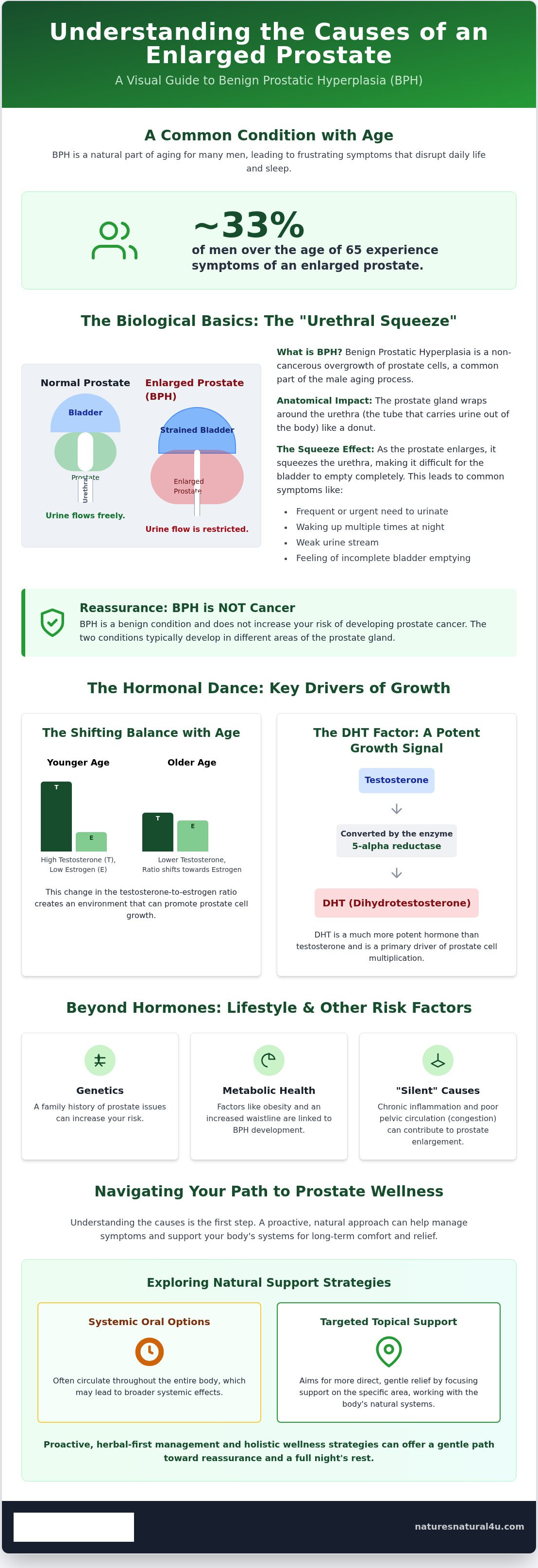
Did you know that nearly 33% of men over the age of 65 (and many much younger) are currently experiencing the same interrupted sleep and urinary frustrations you're facing? It's incredibly draining to wake up multiple times a night, and it's natural to feel anxious while wondering exactly what causes enlarged prostate as you get older. You might feel like your body is starting a "hormonal conversation" you didn't sign up for, leaving you stuck in a cycle of "wait and see" (and worry) at the doctor's office.
The good news is that understanding these triggers is the first step toward reclaiming your VITALITY. This article dives deep into the biological drivers of Benign Prostatic Hyperplasia (BPH), from shifts in dihydrotestosterone (DHT) to lifestyle factors like inflammation and metabolic health. We'll show you how to support your system naturally, offering a clear path toward COMFORT and systemic relief. You'll discover actionable steps to manage symptoms at home (without the immediate need for invasive surgery), giving you the reassurance that a full night of REST is possible.
Key Takeaways
- Understand how age-related hormonal shifts and DHT levels contribute to what causes enlarged prostate, helping you move past the "wait and see" approach.
- Learn why the prostate's "donut" shape around the urethra leads to those frequent nighttime bathroom trips and how to identify Benign Prostatic Hyperplasia (BPH) as a non-cancerous growth.
- Discover the connection between your waistline, genetics, and pelvic circulation to uncover the deeper lifestyle drivers of your physical discomfort.
- Explore the benefits of targeted topical support over systemic oral options for more direct, GENTLE relief that supports your body's natural systems.
- Gain the REASSURANCE that prostate enlargement is a manageable condition that often responds well to proactive, herbal-first management and holistic wellness strategies.
The Biological Basics: Why the Prostate Gland Grows with Age
The prostate is a small, walnut-sized gland that plays a big role in male reproductive health. For most men, it stays quiet for decades, but as you age, it often begins a secondary growth phase. This condition, known as Benign prostatic hyperplasia (or BPH), is essentially a non-cancerous overgrowth of cells. While the word "hyperplasia" sounds clinical, it simply means your cells are multiplying (a natural, if frustrating, part of the aging process). It's a common experience, but that doesn't make the symptoms any less disruptive to your daily life.
Understanding what causes enlarged prostate symptoms starts with a look at your unique anatomy. The prostate sits directly beneath the bladder and wraps around the urethra like a donut. When the "donut" gets thicker, the hole in the middle gets smaller. This creates a mechanical bottleneck that makes it harder for urine to pass through. Interestingly, the actual size of the gland doesn't always dictate how much trouble you'll have (some men with very large prostates have few symptoms, while others with minor enlargement feel significant distress). This means your focus should be on relief and function rather than just the numbers on a scan.
Understanding the Urethral Squeeze
As the prostate expands, it usually grows inward. This puts direct pressure on the urethra, effectively squeezing the tube through which you urinate. Your bladder, being a resilient muscle, tries to compensate by squeezing harder to force the urine out. Over time, this extra effort causes the bladder wall to become thicker and more sensitive. This is why you might feel a sudden, urgent need to go even when your bladder isn't full. It also leads to the "residual urine" problem, where the bladder can't empty completely, leaving you feeling like you need to return to the bathroom just minutes after leaving.
Is it Cancer? Distinguishing BPH from Malignancy
One of the biggest sources of anxiety for men is the fear that an enlarged prostate is a precursor to cancer. We want to offer you immediate REASSURANCE: BPH is not cancer, and having it does not increase your risk of developing malignancy. The two conditions usually grow in different parts of the gland. BPH typically develops in the inner transition zone (the area surrounding the urethra), while cancer more often starts in the outer peripheral zone. For total peace of mind, regular PSA testing is a wonderful tool to monitor your health and ensure your symptoms are purely related to benign growth. Understanding what causes enlarged prostate issues is the first step toward finding a gentle, non-invasive solution that works for your body. If you want to explore the deeper systemic drivers behind this growth, our E-book on Five Element prevention offers a comprehensive look at holistic prostate wellness.
The Hormonal Dance: Testosterone, Estrogen, and the DHT Factor
While we often think of hormones in terms of youth and vitality, they play a complex role in how our bodies change as we mature. When looking at what causes enlarged prostate, researchers often point to a delicate shift in internal chemistry (a process that happens gradually over many years). It isn't just about losing testosterone; it's about how the body balances what remains. This internal "conversation" between different hormones determines whether your prostate stays stable or begins to expand.
As men age, their active testosterone levels naturally decline. However, the body continues to produce and circulate estrogen (yes, men have it too). This change in the testosterone-to-estrogen ratio creates an environment where the prostate is more susceptible to growth signals. According to the Prostate Enlargement (BPH) guidelines from the NIDDK, these hormonal changes are a fundamental part of why the gland begins to expand. It's a natural shift, but one that requires proactive management to maintain COMFORT.
A key player in this process is an enzyme called 5-alpha reductase. This enzyme's job is to convert testosterone into a much more potent hormone called Dihydrotestosterone (DHT). Even when your overall "vitality" feels lower (perhaps you're feeling more tired or less motivated), the prostate can still be awash in these powerful growth signals. The body doesn't stop producing these signals just because you're getting older; it simply changes how it uses them, often favoring growth over maintenance.
The Estrogen Connection in Men
Why does a "female" hormone matter for your prostate? It turns out that rising estrogen levels can actually sensitize prostate cells, making them more "eager" to respond to growth hormones like DHT. Achieving "Hormonal Harmony" (a state of systemic balance where everything works in concert) is essential for maintaining a healthy prostate size. When these hormones are out of sync, the gland receives a constant message to expand rather than remain stable. This shift is a core component of what causes enlarged prostate symptoms for many men over fifty.
DHT: The Primary Driver of Cellular Growth
DHT is significantly more potent than standard testosterone when it comes to prostate tissue. While testosterone is vital for muscle and mood, DHT specifically targets the prostate, signaling cells to multiply and preventing the natural process of cell death (apoptosis). Essentially, DHT tells the prostate to keep getting bigger while forgetting how to "prune" itself. DHT is the primary biological catalyst for BPH. Understanding this "growth signal" is the first step toward finding targeted, gentle ways to support your body's natural systems. If you're looking for ways to maintain this balance and support your long-term wellness, you might consider exploring our complete range of natural wellness solutions designed specifically for male health needs.
Beyond Biology: Lifestyle and Genetic Risk Factors
While aging and hormones are central to the story, your lifestyle and family history act as the environment where these changes unfold. If you've ever wondered why some men seem to bypass these issues while others struggle, the answer often lies in a combination of genetics and metabolic health. Having a father or brother with BPH significantly increases your likelihood of developing symptoms, making proactive awareness essential for long-term comfort. It isn't just about "bad luck"; it's about understanding your body's specific predispositions so you can support it more effectively.
One of the most overlooked factors in what causes enlarged prostate growth is the connection between your waistline and your pelvic health. Carrying extra weight, particularly around the midsection, creates a state of systemic inflammation. This isn't just a matter of aesthetics. Visceral fat is metabolically active and can disrupt the delicate hormonal balance we discussed earlier. Additionally, physical inactivity can lead to poor pelvic circulation, causing blood to pool and potentially contributing to gland congestion. Moving your body daily is a simple, powerful way to keep your systems flowing freely.
While the exact Enlarged prostate causes are still being explored by researchers, the link between metabolic syndrome and gland growth is becoming increasingly clear. Your body is a unified system, and when your blood sugar or blood pressure is out of range, the prostate often pays the price. By focusing on whole-body wellness, you aren't just managing a single gland; you're supporting your entire system's ability to maintain its natural size and function.
The Role of Diet and Nutrition
What you put on your plate directly influences how your body manages growth signals. High-fat and high-sugar diets can trigger insulin spikes and hormonal imbalances that exacerbate BPH symptoms. On the flip side, focusing on "prostate-friendly" nutrients like Zinc and Lycopene provides the building blocks for restoration. For a deep dive into how to align your eating habits with your body's natural needs, we highly recommend exploring our Five Element Prevention Guide for holistic dietary strategies.
Metabolic Health and Insulin Resistance
Metabolic health is perhaps the most critical "silent" driver of prostate enlargement. High levels of insulin, often seen in those with Type 2 Diabetes or insulin resistance, actually act as a growth factor for prostate cells. When your blood sugar is chronically elevated, your body is essentially sending a constant "grow" signal to the gland. Managing your blood sugar through balanced meals and consistent movement isn't just good for your heart; it's a vital step in managing your prostate size and reducing the severity of urinary symptoms. Small, daily choices in your kitchen and your activity levels can lead to a significant sense of RELIEF over time.
The 'Silent' Causes: Inflammation and Pelvic Congestion
While hormones and genetics are the loud voices in the room, there are quieter, persistent factors that often go unnoticed. Chronic inflammation is one of these "silent" drivers. When your body perceives a threat, it sends immune cells to the area. These cells release growth factors that can inadvertently cause prostate tissue to swell. This isn't just a side effect; it's a core part of what causes enlarged prostate issues for many men. This immune response creates a feedback loop where the body is constantly trying to "repair" a gland that isn't actually injured.
Environmental toxins also play a significant role in this delicate balance. We're often exposed to endocrine disruptors in our daily lives, found in everything from plastic containers to household cleaners. These chemicals can mimic estrogen in the body, which makes the prostate more sensitive to growth signals. Combined with the impact of chronic stress, which tightens the muscles around the bladder neck through the sympathetic nervous system, these factors create a "perfect storm" for urinary discomfort. Addressing these external and internal stressors is key to finding lasting COMFORT.
Micro-Infections and the Prostate
Sometimes, low-grade infections linger in the prostate without causing the intense pain or fever associated with acute prostatitis. These micro-infections keep the immune system on high alert, leading to tissue remodeling and gradual growth. Supporting the body's natural defenses is a vital part of finding long-term RELIEF. By addressing these hidden triggers, you can reduce localized swelling and help the gland return to a state of balance. This proactive approach focuses on restoration rather than just managing symptoms through a "wait and see" method.
Circulation and Pelvic Health
We also have to consider the "plumbing" of the pelvic region. The theory of pelvic congestion suggests that poor circulation in the lower abdomen allows metabolic waste to accumulate in the gland. In our modern world, many of us spend hours sitting at desks or in cars. This lack of movement is a major contributor to what causes enlarged prostate symptoms because it limits the flow of fresh, oxygenated blood to the area. Improving circulation is essential for removing waste and delivering the nutrients your prostate needs to stay healthy and functional.
Explore Natural Prostate Cream Benefits
Ensuring that blood flows freely through the pelvic floor can make a massive difference in your daily comfort. When the gland is well-oxygenated and free of metabolic debris, it's much less likely to remain in a state of chronic swelling. Simple lifestyle adjustments, paired with targeted topical support, can help break the cycle of congestion. This provides the GENTLE relief you've been searching for without the need for invasive procedures or harsh chemicals.
Navigating Your Path: Natural Strategies for Prostate Wellness
Understanding the root drivers of your discomfort is a powerful first step, but the real transformation begins when you take proactive action. Many men are now moving away from a passive "wait and see" approach in favor of non-invasive, herbal-first management. Instead of feeling overwhelmed by what causes enlarged prostate symptoms, you can focus on supporting your body's natural ability to maintain balance. This shift is about moving from frustration to VITALITY by using gentle, systemic support that respects your body's chemistry.
A holistic approach isn't just about taking a single pill. It's about creating a "Wellbeing Ritual" that combines mindful nutrition, consistent movement, and targeted topical care. By addressing the hormonal and inflammatory factors we've discussed, you're not just masking a problem; you're encouraging your prostate to return to a state of COMFORT. This methodical path provides a sense of relief and hope, helping you reclaim your nights and your confidence.
Why Topical Support is Gaining Popularity
While oral supplements are common, many men find that they can be harsh on sensitive stomachs or lose potency during the long journey through the digestive tract. Topical application is gaining popularity because it offers a more direct route for localized support. By applying concentrated herbal extracts (like Saw Palmetto) near the pelvic region, you allow for better absorption where it's needed most. It's a GENTLE relief method that avoids systemic stress on your liver and kidneys. Our Natural Prostate Treatment Cream was designed specifically for this purpose, providing a reassuring daily solution that fits seamlessly into your routine.
The Holistic Toolkit for 2026
To achieve the best results, it's often helpful to look at the "big picture" of your health. Combining topical support with a broader strategy can lead to more profound systemic balance. For instance, our Prostate Wellbeing Kit offers a comprehensive approach that addresses multiple drivers of BPH at once. We also know that specific nutrients play a starring role in gland health; using a Vitamin D cream can support your immune system and help manage the "silent" inflammation that often contributes to what causes enlarged prostate growth.
You have the power to influence your body's natural balance. By choosing high-purity, herbal solutions and committing to a healthy lifestyle, you're taking a stand for your long-term wellness. Remember, your journey toward health is personal, and we are here as your dedicated specialist to guide you every step of the way. Relief is not just a possibility; it's a goal we can reach together through steady, purposeful care.
Reclaiming Your Vitality and Peace of Mind
You now have a clearer picture of the complex biological and lifestyle factors that answer the question of what causes enlarged prostate growth. From the "hormonal dance" of DHT to the hidden impact of pelvic congestion and metabolic health, it's clear that your prostate health is deeply connected to your systemic wellness. Understanding these root drivers is the first step toward moving from frustration to proactive restoration.
Our dedicated natural health specialists have developed a non-invasive topical application to support your body's natural systems. By choosing an all-natural herbal formulation, you can target localized discomfort without the stress of systemic side effects. This approach focuses on gentle, long-term support rather than just masking symptoms, allowing you to focus on your recovery with confidence.
You don't have to settle for a "wait and see" approach any longer. With the right tools and a commitment to your wellbeing, a full night of rest and a life of comfort are well within your reach. We're here to support you every step of the way on your journey toward lasting vitality.
Frequently Asked Questions
Is an enlarged prostate always caused by old age?
While age is the primary risk factor (affecting about 33% of men over 65), it isn't the only cause. Factors like metabolic health, genetics, and chronic inflammation also play significant roles. Younger men in their 40s can also experience symptoms if they have a strong family history or metabolic issues. Understanding what causes enlarged prostate growth beyond just the calendar helps you take a more proactive, systemic approach to your health.
Can stress actually make my prostate symptoms worse?
Yes, stress directly impacts your urinary comfort by activating the sympathetic nervous system. This "fight or flight" response causes the muscles around the bladder neck and prostate to tighten, making it much harder to urinate freely. Stress also increases systemic inflammation, which can lead to localized swelling. Managing your stress levels is a vital part of any "Wellbeing Ritual" (alongside topical support) to help relax the pelvic floor and reduce urgency.
What is the fastest way to shrink an enlarged prostate naturally?
There is no "overnight" fix, but a multi-pronged approach often yields the most efficient results. Combining a low-sugar diet with consistent movement and targeted topical care helps address the root drivers like insulin resistance and poor circulation. Using concentrated herbal extracts (such as those found in our Natural Prostate Treatment Cream) provides direct support to the gland. This holistic strategy encourages the body's natural systems to return to a state of balance and COMFORT over time.
Does diet really affect the size of the prostate gland?
Diet is a powerful lever in managing prostate health because it influences your hormonal and inflammatory environment. High-sugar diets raise insulin levels, which acts as a growth signal for prostate cells. Conversely, focusing on "prostate-friendly" nutrients like Zinc and Lycopene supports cellular health. By shifting toward a whole-food, anti-inflammatory diet, you are addressing what causes enlarged prostate symptoms at a foundational level, rather than just managing the surface-level discomfort.
Is BPH a precursor to prostate cancer?
No, Benign Prostatic Hyperplasia is a non-cancerous condition and does not increase your risk of developing prostate cancer. While both conditions involve cell growth, they typically occur in different zones of the gland. BPH grows in the inner transition zone (surrounding the urethra), while cancer usually starts in the outer peripheral zone. Regular PSA testing is still recommended for total peace of mind, but you can be REASSURED that BPH is its own separate health journey.
How do I know if my prostate enlargement is hormonal?
Most age-related prostate enlargement involves a hormonal component, specifically the shift in your testosterone-to-estrogen ratio. If you are experiencing symptoms alongside other signs of aging (like lower energy or changes in body composition), it's highly likely that hormones like DHT are driving the growth. This "hormonal conversation" signals your prostate cells to multiply. Identifying this shift allows you to choose targeted, systemic solutions that focus on restoring your body's natural "Hormonal Harmony."
Can a natural cream really help with urinary frequency?
A high-quality natural cream can provide significant support by delivering herbal extracts directly to the pelvic region. This non-invasive topical application bypasses the digestive system, allowing the ingredients to be absorbed more efficiently near the gland. This localized support helps soothe inflammation and improve circulation, which can lead to a noticeable reduction in nighttime bathroom trips. It's a GENTLE relief method that fits perfectly into a proactive daily wellness routine.
What are the first warning signs of an enlarged prostate?
The earliest signs usually involve subtle changes in your urinary patterns. You might notice a hesitant start when trying to go, a weaker stream, or the feeling that your bladder isn't completely empty. Waking up more than once a night to urinate (nocturia) is often the sign that prompts men to seek answers. Catching these early signals allows you to implement natural strategies and lifestyle changes before the symptoms become more disruptive to your daily life.