
Prostate Health Exercises: A Guide to Natural Vitality
Did you know that by the time a man reaches age 60, there is a 50% chance he will experience some degree of prostate enlargement? It is a sobering reality that impacts millions; however, adopting specific exercises for prostate health improvement can significantly change your trajectory. You might be all too familiar with the frustration of fractured sleep due to frequent nighttime bathroom trips or the nagging anxiety that comes with a feeling of incomplete bladder emptying. It's draining to feel like you've lost a sense of control over your own physical well-being.
The good news is that movement can be a powerful form of medicine. This guide provides a comprehensive, low-impact routine (specifically designed for gentle relief) to help you RESTORE your comfort and support long-term wellness naturally. You'll discover how a strategic mix of pelvic floor strengthening, circulation-boosting aerobic activity, and restorative yoga can reduce inflammation. We'll walk through exactly how to implement these gentle changes to help you achieve reduced urgency and a renewed sense of VITALITY.
Key Takeaways
- Discover how gentle movement counteracts the "sedentary prostate" by restoring blood flow and helping your lymphatic system flush away toxins.
- Learn to master pelvic floor exercises for prostate health improvement to strengthen the muscles responsible for bladder control and physical comfort.
- Identify the "Goldilocks" zone of aerobic activity where moderate exercise provides maximum circulatory benefits without overtaxing your system.
- Explore specific yoga poses designed to release chronic pelvic tension and open the hips for better lower abdominal circulation.
- Understand the importance of holistic synergy and how topical herbal support can soothe the pelvic area after your daily activity.
Why Physical Movement is Essential for Prostate Wellness
For many men, the modern lifestyle involves hours of sitting at a desk, in a car, or on a sofa. This creates what specialists often call the "Sedentary Prostate." When you remain seated for long periods, you physically compress the pelvic floor, which acts like a kink in a garden hose. This compression restricts vital blood flow and prevents oxygen from reaching the prostate gland efficiently. By introducing consistent exercises for prostate health improvement, you effectively "unkink" that hose, allowing for better systemic support and a sense of physical relief.
Your lymphatic system also plays a crucial role here. Unlike your heart, the lymphatic system does not have its own pump; it relies entirely on muscle movement to circulate fluid and flush out toxins. Without regular activity, these waste products can linger in the pelvic region, potentially contributing to inflammation and discomfort. Beyond the physical, there is a significant psychological benefit to movement. Stress often causes men to subconsciously tighten their pelvic muscles, creating a "tension cycle" that exacerbates urinary urgency. Gentle movement breaks this cycle, offering a steady and reassuring path toward relaxation.
To better understand this concept, watch this helpful video:
Circulation and Inflammation: The Internal Connection
Pelvic congestion is defined as the pooling of blood within the pelvic veins, a common factor that can worsen the symptoms of an enlarged prostate. When you engage in targeted movement, your heart rate increases, acting as a natural pump that delivers fresh oxygen and essential nutrients directly to the prostate tissues. This process is vital for restoration and purity within the gland. Since your prostate health is deeply intertwined with your vascular wellness, maintaining a healthy heart through regular activity is one of the most effective ways to support your body naturally. Mastering Pelvic Floor Exercises (Kegels) is a fantastic way to begin focusing on this localized circulation.
Hormonal Balance Through Activity
Regular movement is a powerful tool for regulating the hormones that influence prostate size. Many researchers have identified a clear link between insulin resistance and prostate enlargement. When you stay active, your body processes sugar more efficiently, which helps keep growth-stimulating hormones like DHT in check. Additionally, maintaining a healthy weight through exercises for prostate health improvement helps lower estrogen levels. In men, excess body fat can lead to higher estrogen, which may further stimulate the growth of prostate tissue. Taking a proactive, gentle approach to exercise ensures you are supporting your hormonal health without causing unnecessary strain on your body.
Mastering Pelvic Floor Exercises (Kegels) for Men
While many resources focus on Kegels for post-surgery recovery, these exercises for prostate health improvement are equally vital for managing daily symptoms of an enlarged prostate (BPH). The goal is to strengthen the pubococcygeus muscle, which supports the bladder and bowel. To find this muscle, imagine you are trying to stop the flow of urine mid-stream. This technique is purely for identification (to help you locate the right area); you shouldn't make a habit of doing it while actually urinating, as it can interfere with proper bladder emptying.
Once you've identified the right muscles, the secret to success is isolation. You're looking for a subtle internal lift. If you find yourself clenching your glutes, tensing your abdominals, or holding your breath, you're working too hard. These exercises are entirely discrete, meaning you can perform them while sitting at your desk, driving, or even while reading. Because they are invisible to others, they offer a perfect way to reclaim a sense of control over your physical well-being without any invasive procedures.
Step-by-Step Guide to Men’s Kegels
Building a resilient pelvic floor requires two distinct types of movement to ensure total muscle responsiveness and support. Start with the "Quick Flick" (fast, one-second contractions) to train the muscles to react quickly to sudden pressure. Follow this with the "Slow Hold," where you gradually contract the muscle and hold for three to five seconds before slowly releasing. For beginners, a manageable starting point is three sets of ten repetitions daily. This structured approach ensures you're building the necessary endurance for long-term Prostate-Friendly Cardio and general pelvic vitality.
Common Mistakes to Avoid
One of the most frequent errors is holding your breath during contractions. Oxygenation is essential for muscle health, so focus on breathing deeply and naturally throughout each set. Additionally, avoid the temptation to over-train. Just like any other muscle group, the pelvic floor can suffer from fatigue if pushed too hard, which may temporarily increase urinary urgency. Consistency over several weeks of exercises for prostate health improvement is far more important than the intensity of a single session. For those seeking a comprehensive approach, following Natural and Non-Invasive Relief Strategies can provide the clarity needed for lasting results. If you find the area feels particularly tense after your routine, using soothing herbal support can help maintain comfort as your body adapts.
Aerobic Activity: Choosing Prostate-Friendly Cardio
While targeted muscle work provides a localized foundation for health, your gland also requires systemic support to thrive. Finding the "Goldilocks" zone of aerobic intensity is crucial; you want enough movement to stimulate circulation but not so much that you trigger a significant stress response. High-intensity endurance training can sometimes lead to elevated cortisol levels, which may interfere with your delicate hormonal balance. Instead, focus on exercises for prostate health improvement that maintain a moderate heart rate. Brisk walking is arguably the most effective tool in your arsenal because it is accessible, requires no special equipment, and provides a gentle, rhythmic massage to the pelvic region. Swimming is another fantastic choice, offering a zero-impact environment that helps reduce systemic inflammation without placing any direct pressure on the perineum.
We must address the "Cycling Caution" that many men overlook when starting a new fitness regime. While cycling is excellent for cardiovascular health, narrow, hard saddles can put direct pressure on the prostate and perineum, potentially aggravating existing symptoms or causing temporary discomfort. If you are a keen cyclist, consider switching to a wider, padded seat or a "no-nose" saddle to protect your pelvic comfort. This simple adjustment allows you to enjoy the heart-healthy benefits of the sport without compromising your prostate wellness.
Low-Impact vs. High-Impact Activities
Choosing the right type of movement ensures you are supporting your body's natural systems rather than taxing them. The following table compares common activities to help you decide which path is right for you:
| Activity | Impact Level | Prostate Benefit |
|---|---|---|
| Brisk Walking | Low | High (Boosts pelvic circulation) |
| Swimming | Zero | High (Reduces inflammation) |
| Tai Chi | Low | High (Pelvic relaxation) |
| Long-distance Cycling | Variable | Moderate (Risk of irritation) |
| Heavy Weightlifting | High | Low (May increase pelvic pressure) |
Pounding exercises, such as long-distance running on concrete, can cause temporary pelvic tension due to the repetitive jarring force. This impact can ripple through the musculoskeletal system, leading to tightness in the hips and lower back that indirectly affects the prostate. Choosing low-impact movements supports your joints and your prostate health simultaneously, ensuring you can stay active for years to come without unnecessary setbacks.
Building a Weekly Routine
Aiming for the recommended 150 minutes of activity per week might feel daunting, but it becomes much simpler when broken into manageable 20-minute daily chunks. You might even incorporate "Tai Chi walking," which focuses on slow, deliberate steps to encourage balance and deep pelvic relaxation. Understanding Why Physical Movement is Essential helps you stay motivated to keep your body in motion. As you develop this routine, remember that these exercises for prostate health improvement work best when paired with other restorative habits. Exploring Natural Prostate Cream Benefits: A Guide to Non-Invasive Support can help you understand how to soothe the area and maintain comfort after your daily walk.
Yoga and Stretching for Pelvic Tension Relief
While aerobic activity focuses on the heart and lungs, flexibility is often the missing link in a man's wellness journey. The "Chronic Pelvic Tension" theory suggests that much of the persistent discomfort men feel actually stems from the surrounding musculature rather than just the gland itself. When you spend the majority of your day sitting, your hip flexors become short and tight. This physical shortening pulls on the pelvic floor, creating a cycle of restricted blood flow and muscle guarding. Integrating yoga as part of your exercises for prostate health improvement helps to physically "open" this area, releasing the mechanical pressure that contributes to that nagging feeling of incomplete bladder emptying.
Establishing a "Relaxation Ritual" before bed is particularly beneficial for those struggling with frequent nighttime urination. By gently stretching the pelvic region and calming the nervous system, you prepare your body for deeper, uninterrupted sleep. This proactive maintenance doesn't just improve your physical comfort; it restores your sense of control over your evening rest.
Three Essential Poses for Prostate Support
These three poses are designed to target the specific areas where men tend to hold the most tension. They are simple to perform and require no previous yoga experience.
- Cobbler’s Pose (Baddha Konasana): Sit on the floor with the soles of your feet touching and your knees falling out to the sides. This pose is unparalleled for opening the groin safely and increasing blood flow to the lower abdomen.
- Hero Pose (Virasana): Kneel with your knees together and your feet slightly wider than your hips, then sit back between your heels. This position supports the pelvic region and encourages an upright posture that relieves downward pressure on the bladder.
- Knee-to-Chest (Apanasana): Lying on your back, gently pull your knees toward your chest. This movement is excellent for relieving pressure in the lower back and pelvis, providing immediate sensory relief after a long day of standing or sitting.
The Role of Deep Breathing
Stress is a physical event that triggers the sympathetic nervous system, often causing you to subconsciously tighten your pelvic floor muscles. You can counteract this by practicing diaphragmatic or "Belly Breathing." By focusing on expanding your abdomen rather than your chest, you encourage parasympathetic activation (your body's natural "rest and digest" state). Deep diaphragmatic breathing lowers cortisol levels to protect the prostate from the systemic effects of chronic stress. This internal massage of the organs through breath is a vital component as you explore these exercises for prostate health improvement.
Consistency with these stretches will yield the best results over time. If you find that certain areas feel particularly stubborn or tender, you may want to consult our Five Element Prevention Guide for a deeper understanding of how your body's systems interact. Pairing these gentle movements with a dedicated specialist's approach to herbal support creates a powerful synergy for your long-term vitality.
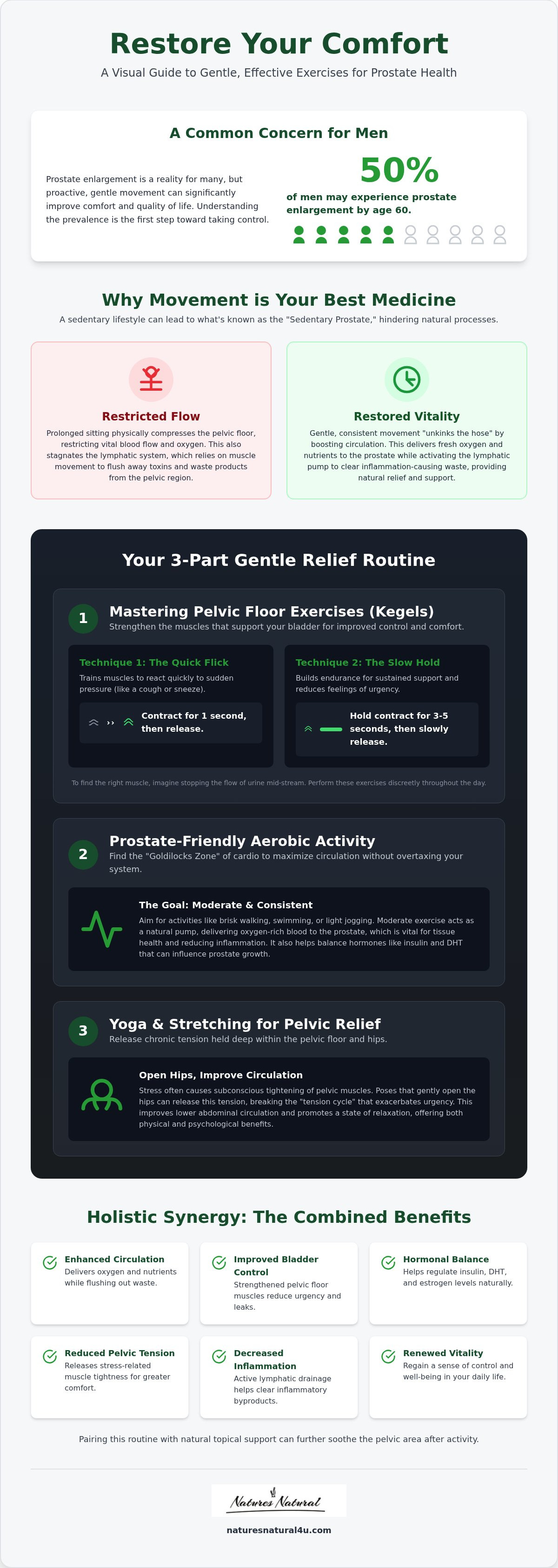
Holistic Synergy: Pairing Exercise with Natural Support
While the exercises for prostate health improvement discussed in previous sections provide the mechanical foundation for wellness, true VITALITY often requires a more comprehensive strategy. Physical movement acts as a natural engine for the body, but targeted herbal support provides the necessary "fuel" for systemic restoration. When you exercise, your body's temperature rises and your circulation increases, creating a unique window of opportunity for maximum absorption. By pairing your daily walk or yoga session with localized care, you address the issue from both a structural and a systemic level simultaneously. This multi-faceted approach ensures that you aren't just managing symptoms, but actively nurturing your body's natural systems.
Adopting a holistic mindset means looking at your daily habits as a unified ritual. Using a topical solution immediately after your routine can help to soothe the pelvic area and nourish the tissues. This proactive maintenance turns your exercise session into a complete wellness experience, moving you closer to the sense of relief you deserve.
The Power of Topical Herbal Care
Many men rely solely on oral supplements, which must pass through the entire digestive system and liver before reaching the pelvic region. In contrast, the Natural Prostate Treatment Cream offers a direct, non-invasive route to the gland. This topical application ensures that the "Natural and Reassuring" herbal ingredients are delivered precisely where they are needed most, bypassing the delays of digestion. The advantage of skin absorption is the speed and purity of delivery, providing a gentle way to support the prostate without the systemic load of pills. For those who want to dive deeper into the connection between their environment and their health, the Five Element Prevention Guide E-book provides essential holistic insights for a total lifestyle shift.
Your Next Steps to Vitality
Embarking on a new health journey can feel overwhelming, so it is best to start small. Commit to just one new exercise and one natural product today. If you are serious about making a total lifestyle change, the Prostate Wellbeing Kit provides a structured, all-in-one starting point for your recovery. This kit combines the benefits of topical support with systemic herbal care, ensuring you have the tools needed to succeed. Consistency with your exercises for prostate health improvement will yield the best results when supported by these high-quality, herbal formulations. Remember, healing is a journey of steady progress rather than overnight fixes. You are no longer alone in this process; you have a dedicated partner committed to your long-term comfort and vitality.
Your Journey to Lasting Pelvic Comfort
You now have a clear, non-invasive roadmap to support your long-term wellness. By consistently practicing exercises for prostate health improvement, you're doing more than just managing symptoms; you're actively restoring the natural circulation and purity your body needs to thrive. From the targeted strength of pelvic floor work to the restorative calm of yoga, each movement brings you one step closer to uninterrupted sleep and a sense of physical freedom.
It's vital to remember that physical activity is most effective when paired with localized, solution-oriented care. Our herbal creams offer a gentle, trusted alternative for men seeking systemic support without the need for invasive procedures. You've taken the most important step today by choosing to be proactive about your physical well-being.
You don't have to navigate these health challenges alone. With a steady, experienced hand and nature's finest ingredients, a future of renewed vitality and comfort is well within your reach. Stay consistent, stay positive, and embrace the restoration your body deserves.
Frequently Asked Questions
Can exercise actually shrink an enlarged prostate?
No, physical movement cannot physically shrink the prostate gland once it has enlarged, but it is incredibly effective at managing the symptoms of Benign Prostatic Hyperplasia (BPH). Regular activity helps by reducing systemic inflammation and improving pelvic circulation (which prevents blood pooling). By regulating hormones like insulin and DHT, you are providing the systemic support your body needs to maintain a healthy environment and prevent further growth naturally.
How long does it take for pelvic floor exercises to show results in men?
Most men begin to notice a tangible improvement in bladder control and a reduction in urinary urgency within 6 to 12 weeks of daily practice. It is a journey of steady, purposeful progress rather than an overnight fix. Consistency is the single most important factor; your muscles need time to build the endurance required for long-term RESTORATION and physical confidence in your daily life.
Is cycling bad for my prostate health?
Cycling is not inherently harmful, but the prolonged pressure from narrow, traditional saddles can irritate the perineum and prostate. This compression can sometimes aggravate existing symptoms or lead to temporary discomfort. To enjoy the cardiovascular benefits without the risk, you might consider switching to a wider, padded seat or a "no-nose" saddle. This simple adjustment ensures your pelvic health remains protected while you stay active.
What is the best time of day to perform prostate-friendly exercises?
The ideal time is whichever slot allows you to be most consistent, though many men find a morning routine helps stimulate circulation for the day ahead. Conversely, performing gentle yoga or stretching in the evening can create a "Relaxation Ritual" (calming the nervous system) that may help reduce those disruptive nighttime bathroom trips. Listen to your body's natural rhythm to find what feels most restorative and manageable.
Can I do Kegel exercises if I have already had prostate surgery?
Yes, Kegel exercises are frequently recommended after surgery to help men regain urinary control and strengthen the pelvic floor. It's vital to wait until your surgical site has fully healed and to follow the guidance of your healthcare provider. These exercises for prostate health improvement offer a gentle, non-invasive way to support your recovery and help you reclaim a sense of control over your physical well-being.
What happens if I feel pain during these exercises?
You should stop immediately if you experience sharp or persistent pain. While mild muscle fatigue is a normal part of building strength, actual pain often indicates that you are over-training or using incorrect form (such as tensing your abdominals instead of isolating the pelvic floor). Reassuringly, most issues can be resolved by slowing down your pace and focusing on deep, diaphragmatic breathing to ensure proper oxygenation.
How does losing weight through exercise help my prostate?
Losing excess body fat helps lower the levels of estrogen and growth-stimulating hormones that can contribute to an enlarged prostate. Because fat tissue can convert testosterone into estrogen, maintaining a healthy weight is a powerful way to support your hormonal balance. This reduction in weight also decreases the physical pressure on your bladder, leading to a noticeable sense of relief and improved systemic VITALITY.
Should I use prostate cream before or after my workout routine?
It is generally most beneficial to apply your Natural Prostate Treatment Cream after your workout. When you finish your exercises for prostate health improvement, your body temperature is slightly elevated and your circulation is at its peak. This state enhances the skin's ability to absorb the "Natural and Reassuring" herbal ingredients, providing targeted nourishment and soothing relief exactly when your pelvic tissues are most receptive to restoration.