
Managing BPH Symptoms Without Medication: A Practical Daily Guide
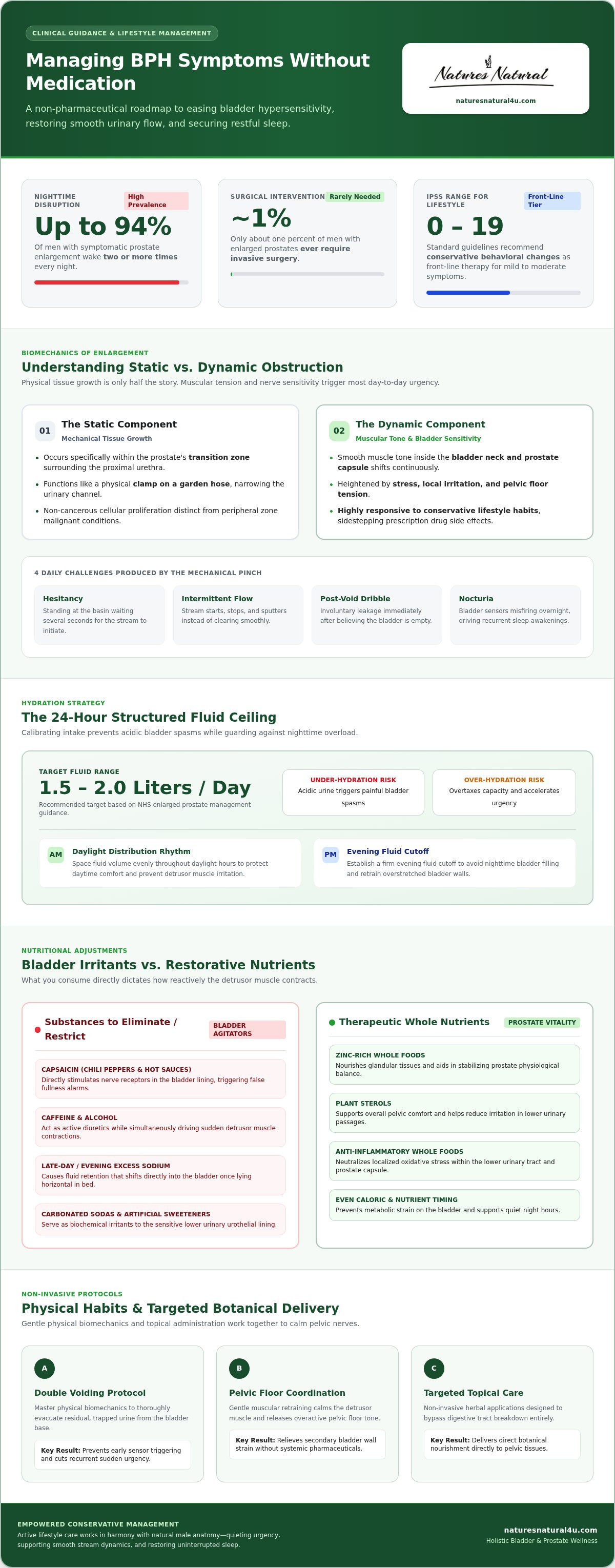
Up to 94% of men with symptomatic prostate enlargement wake two or more times every night, yet only about 1% ever require invasive surgery. If you're constantly exhausted by sudden urinary urgency and a hesitant, interrupted stream, managing BPH symptoms without medication is a realistic, deeply empowering path forward. You don't have to accept fragmented sleep as an inevitable part of getting older, nor do you have to endure the worrisome systemic side effects that often accompany standard prescription drugs.
It's completely natural to feel frustrated when you must map every outing around restroom locations or dread bedtime because of inevitable disruptions. You deserve reliable relief that works in harmony with your physiology. In this practical guide, you will discover actionable lifestyle strategies, fluid timing protocols, and gentle supportive habits (including targeted topical botanicals) designed to calm an irritable bladder and restore daily comfort. Ahead, we provide a sustainable step-by-step routine to help you quiet urgency, support smooth flow, and finally enjoy uninterrupted, Restorative sleep.
Key Takeaways
- Understand the difference between mechanical tissue enlargement and dynamic muscle tone, revealing why managing BPH symptoms without medication starts with soothing bladder hypersensitivity.
- Identify hidden dietary bladder irritants (including capsaicin and late-day sodium) and replace them with nutrient-dense foods rich in zinc and plant sterols that support pelvic Comfort.
- Master physical biomechanics, such as gentle pelvic floor coordination and double voiding, to thoroughly evacuate trapped urine and reduce sudden urgency.
- Establish a structured 24-hour hydration rhythm with an evening fluid cutoff, retraining overstretched bladder walls to help secure quiet, uninterrupted nights.
- Discover the targeted benefits of non-invasive topical botanicals, which bypass digestive breakdown to deliver direct herbal nourishment to pelvic tissues.
Understanding BPH and Why Non-Pharmaceutical Management Works
Every man's urinary tract relies on a delicate balance of muscular coordination and open passages. As men mature, the walnut-sized prostate gland naturally enlarges, a condition clinically termed benign prostatic hyperplasia. This gradual enlargement narrows the urethral channel running through the center of the gland. However, physical tissue growth (the static component) is only half the story. Smooth muscle tone within the bladder neck and prostate capsule (the dynamic component) constantly shifts in response to stress, local irritation, and pelvic floor tension.
Because dynamic tension and bladder hypersensitivity cause many of the most disruptive urges, managing BPH symptoms without medication is a highly effective, clinically supported approach. In fact, standard clinical guidelines identify conservative behavioral changes as front-line therapies for men dealing with mild-to-moderate lower urinary tract symptoms (scores of 0 to 19 on the International Prostate Symptom Score). Choosing non-drug management helps you sidestep common pharmaceutical drawbacks like chronic fatigue, orthostatic dizziness, and sexual dysfunction.
The Mechanics of Prostate Enlargement
Prostate tissue growth occurs specifically within the transition zone, the internal segment surrounding the proximal urethra. As this tissue expands, it compresses the urinary passage like a clamp on a garden hose. This non-cancerous cellular proliferation differs fundamentally from malignant prostate disease, which typically begins in the outer peripheral zone. The mechanical pinch produces recognizable daily challenges:
- Hesitancy: Standing at the basin waiting several seconds for the stream to begin.
- Intermittent flow: A stream that starts, stops, and sputters rather than clearing smoothly.
- Post-void dribbling: Annoying leakage immediately after you believe your bladder is empty.
- Nocturia: Bladder sensors misfiring overnight, causing recurrent awakenings.
Why Conservative Management is a Valid First Line
Active surveillance doesn't mean passively waiting for urinary issues to worsen. Instead, it represents proactive physical rehabilitation. By modifying your fluid timing, calming pelvic nerves, and retraining your detrusor muscle, you directly relieve secondary bladder strain without altering internal chemistry. This gentle, holistic approach works with your natural anatomy, restoring daily Bladder Control and long-term pelvic comfort on your own terms.
Targeted Dietary Adjustments for Prostate and Bladder Relief
What you put on your plate directly dictates how reactive your bladder behaves. The detrusor muscle and delicate urotheial lining respond quickly to systemic inflammation, transforming mild prostate fullness into sudden, urgent bathroom runs. Making intentional nutritional shifts is one of the most reliable cornerstones when managing BPH symptoms without medication. By calming biochemical irritation from within, you give your lower urinary system the biological breathing room it needs to function smoothly.
Hydration balance requires thoughtful precision. Aim for a total fluid ceiling between 1.5 and 2.0 liters per day. Drinking too little concentrates your urine, creating acidic waste that triggers painful bladder spasms; drinking excessively overtaxes your capacity. Following trusted NHS enlarged prostate management guidance, spacing your fluids evenly throughout daylight hours protects daytime Comfort without creating nighttime sleep emergencies.
Eliminating Hidden Bladder Irritants
Certain consumables act as direct neuro-muscular agitators in the urinary tract. Capsaicin (found in chili peppers and hot sauces) stimulates nerve receptors in the bladder lining, triggering false alarms of fullness. Caffeine and alcohol exacerbate this by acting as diuretics while simultaneously driving detrusor muscle contractions. Cut back on carbonated sodas, artificial sweeteners, and excess evening sodium (which shifts fluid straight into your bladder once you lie flat) to dramatically ease urinary urgency.
Nutrient-Dense Foods Supporting Prostate Vitality
Replacing irritating foods with therapeutic whole nutrients helps neutralize localized oxidative stress. Build your daily meals around anti-inflammatory whole foods that nourish glandular tissue and support muscle relaxation:
- Cooked tomatoes: Simmering tomatoes in olive oil unlocks bioavailable lycopene, a potent carotenoid antioxidant that supports prostate cellular integrity.
- Raw pumpkin seeds: Packed with plant sterols and bioavailable zinc (an essential mineral concentrated naturally in healthy prostate tissue).
- Wild-caught cold-water fish: Rich in omega-3 fatty acids that actively dial down pelvic tissue inflammation.
- Cruciferous vegetables: Broccoli and Brussels sprouts supply sulforaphane, helping your liver clear hormonal metabolites efficiently.
Pairing these foundational nutritional changes with a broader holistic lifestyle empowers your body from the ground up. To explore gentle, plant-derived products that work alongside your clean diet, take a moment to browse pure botanical wellness options that support daily vitality naturally.
Physical Techniques: Pelvic Floor Exercises and Double Voiding
Muscular conditioning offers an immediate, tangible way to regain authority over your urinary tract. When an enlarged prostate elevates the bladder neck, urine pools in dependent pockets, causing premature sensations of fullness and frustrating post-void dribble. Incorporating targeted physical biomechanics is an essential pillar in managing BPH symptoms without medication. By strengthening the pelvic cradle and adopting structured voiding methods, you directly train your urinary system to empty completely and resist spastic contractions.
Mastering Male Pelvic Floor Conditioning
Most men never think about their pelvic floor until urgency strikes. The pubococcygeus (PC) muscle forms a supportive sling underneath the bladder and rectum. Clinical trials demonstrate that dedicated pelvic floor muscle training delivers an average reduction of 4.59 points on the International Prostate Symptom Score, along with nearly two fewer daytime voids. To isolate these muscles accurately:
- Locate the muscle: Imagine tightening your internal muscles to stop urination midstream or gently lifting your testicles upward. Keep your glutes, thighs, and lower abdomen completely soft.
- Contract and release: Draw the pelvic floor upward and inward for 5 steady seconds, then release fully for 5 seconds. The relaxation phase is just as vital as the lift.
- Breathe naturally: Avoid holding your breath during contractions; inhale deeply into your ribs and exhale smoothly through the effort.
Practicing three sets of 10 repetitions daily, as outlined in the NHS lifestyle guidance for enlarged prostate symptoms, builds durable tone that calms sudden spasms and curbs embarrassing post-void leakage.
The Mechanics of Double Voiding
Bladder geometry shifts as the prostate expands, frequently leaving residual fluid trapped behind the urethral opening. Double voiding relies on simple gravity and positional changes to drain this excess without straining. First, sit comfortably on the toilet and urinate normally without bearing down. Once the initial stream finishes, remain seated for 20 to 30 seconds while taking slow, diaphragmatic breaths. Next, lean slightly forward at the waist (which angles the bladder floor downward) and initiate a second gentle void. This straightforward two-step sequence clears stagnant urine, extending the peaceful interval between bathroom visits and keeping you in complete Control throughout the day.
Creating a Non-Disruptive Daily Routine and Sleep Protocol
Nighttime waking rarely stems from prostate volume alone. Research reveals nocturnal polyuria (excessive overnight urine production) correlates primarily with evening fluid habits and daytime circulatory pooling. Structuring a consistent 24-hour timeline is essential when managing BPH symptoms without medication. By scheduling timed voiding intervals every two to three hours during the day, you retrain overstretched bladder walls to handle volume comfortably, breaking the chronic cycle of reactionary, panic-driven bathroom trips.
Hydration Timing and Evening Rules
Predictable hydration keeps your kidneys active when you want them working and quiet when you need rest. Front-load your daily liquid intake between 8:00 AM and 6:00 PM, aiming to consume roughly 80% of your total water during these active hours. Enforce a strict fluid cutoff three hours before turning out the lights. If your mouth feels dry in the late evening, take tiny sips rather than gulping full glasses. Additionally, keep your bedroom comfortably warm; sudden nighttime chills can stimulate the nervous system and provoke rapid bladder contractions that jolt you awake.
Daytime Mobility to Relieve Pelvic Congestion
Physical stillness encourages venous blood and fluid to pool in the lower pelvis, irritating sensitive tissues. Stand up and move for two minutes every 45 minutes to ease constant pelvic floor compression. A brisk 20-minute daily walk further promotes localized blood circulation, reducing inflammatory fluid stagnation around the prostate capsule.
One of the most transformative evening habits involves leg elevation. When you sit or stand all day, gravity pulls excess fluid into your calves and ankles. Once you lie horizontal in bed, that fluid re-enters your bloodstream, filters through the kidneys, and fills your bladder at 2:00 AM. To eliminate this trigger, elevate your feet above hip level for 20 minutes around 5:00 PM. This simple shift allows your body to process and void stored fluid well before bedtime, protecting your Deep Sleep.
Topical Botanical Care: A Targeted Complement to Holistic Habits
Dietary adjustments and physical conditioning lay a strong groundwork, yet daily comfort often benefits from localized, direct support. For decades, men seeking botanical support relied almost exclusively on oral capsules like saw palmetto or pygeum. However, swallowing capsules means active botanical compounds must survive harsh stomach acids, navigate intestinal breakdown, and endure liver metabolism. Very little active herbal compound ultimately reaches the congested pelvic region. Exploring topical care offers an innovative way of managing BPH symptoms without medication, bridging internal wellness with targeted external soothing.
Why Targeted Topical Application Outperforms Oral Supplements
Transdermal delivery allows botanical phytonutrients to absorb directly through the skin of the perineum and lower abdominal wall. Bypassing the gastrointestinal tract prevents uncomfortable digestive upset while delivering active botanicals directly to nearby pelvic tissues. To understand the science behind external absorption, read our guide on natural prostate cream benefits for deeper analysis. Delivering pure botanical constituents through the skin provides a clean, non-invasive method to nourish the pelvic floor and support microcirculation naturally.
Integrating Natural Creams into Your Evening Routine
Consistency transforms simple habits into deep physical relief. Applying a targeted botanical formula works best in the evening, right when your body prepares for rest:
- Prepare the skin: Take a warm shower or sitz bath before bed. Warm water dilates dermal pores and relaxes contracted pelvic floor muscles, priming the area for maximum transdermal uptake.
- Apply gently: Massage a measured portion of Natural Prostate Treatment Cream 15ml smoothly onto the perineum (the area between the scrotum and anus) and lower pelvic area until fully absorbed.
- Release tension: Pair this application with slow diaphragmatic breathing. Inhale gently and exhale fully, letting go of residual tightness in your groin and lower abdomen.
Pairing nightly topical application with your fluid timing routine creates a powerful, synergistic defense against overnight urgency. For men seeking an all-inclusive daily routine, comprehensive Prostate Health Treatment Kits provide an orderly, non-invasive protocol to protect long-term comfort and sustain calm, unbroken sleep.
Reclaim Bladder Confidence and Restful Sleep Today
Living with an enlarged prostate doesn't require resigning yourself to fragmented sleep or harsh pharmaceuticals. By aligning your daily hydration timing, eliminating bladder irritants, and practicing simple double voiding, managing BPH symptoms without medication becomes a practical, sustainable reality. Small, disciplined habits steadily calm detrusor irritability, helping you regain reliable Bladder Control without systemic side effects.
When you reinforce these daily routines with targeted transdermal care, physical relief deepens. Formulas crafted for direct botanical absorption bypass digestive interference entirely, delivering 100% natural herbal ingredients right to the pelvic area. Whether you apply a single botanical cream or adopt complete Prostate Health Treatment Kits for multi-layered daily care, choosing gentle, non-invasive wellness respects your body's natural physiology while nurturing lasting Comfort.
Take charge of your health today. With patient, daily consistency, you can quiet sudden urinary urgency, protect your daytime peace of mind, and finally enjoy uninterrupted, deeply restorative nights.
Frequently Asked Questions
Can mild to moderate BPH symptoms truly be managed without prescription medication?
Yes, managing BPH symptoms without medication is clinically recognized as an effective first-line approach for mild to moderate discomfort. While behavioral strategies do not shrink the physical gland itself, they effectively relax smooth muscle tension, reduce detrusor irritability, and improve bladder emptying. By addressing fluid timing, reducing dietary bladder irritants, and strengthening pelvic tone, most men achieve meaningful relief and stable urinary Control without pharmaceutical intervention.
How quickly can I expect results from lifestyle adjustments and pelvic floor training?
Behavioral adjustments often produce noticeable improvements within days. Removing caffeine, hot spices, and late-evening fluids quickly quiets bladder irritation and cuts nighttime bathroom trips within one to two weeks. Physical conditioning, including pelvic floor muscle training and double-voiding routines, typically requires four to eight weeks of daily consistency. Over time, neuromuscular retraining progressively strengthens bladder capacity and minimizes post-void dribbling.
What are the most effective pelvic floor exercises for men with an enlarged prostate?
The most effective routine isolates the pubococcygeus muscle through targeted contractions. Imagine drawing your pelvic floor upward or gently lifting your testicles while keeping your buttocks, abdomen, and thighs completely relaxed. Hold this internal lift for five seconds, then release fully for five seconds. Completing three sets of ten repetitions daily trains the muscular sling supporting your bladder, dramatically dampening sudden urgency and curbing post-void leakage.
Why do oral saw palmetto supplements often fail to provide noticeable urinary relief?
Swallowing oral botanical capsules exposes active plant compounds to stomach acid, digestive enzymes, and liver breakdown before they enter the bloodstream. Consequently, only a tiny fraction of the active lipid sterols ever reaches congested pelvic tissues. High product variability and low oral bioavailability explain why large-scale clinical trials show inconsistent results for oral saw palmetto, leaving many men searching for more direct delivery methods.
How does a natural prostate treatment cream work through the skin?
A natural prostate treatment cream works via direct transdermal absorption through the perineal skin. Because the perineum sits directly beneath the prostate and pelvic floor musculature, lipid-soluble herbal compounds absorb locally without encountering gastrointestinal breakdown. This targeted topical application soothes surrounding pelvic tissues, supports healthy microcirculation, and helps relax external tension, providing a gentle, non-invasive complement to your broader daily wellness routine.
What evening habits reduce frequent nighttime urination without affecting daytime hydration?
To conquer nocturnal waking while staying thoroughly hydrated, drink roughly 80% of your daily water between 8:00 AM and 6:00 PM. Implement a strict fluid cutoff three hours before sleep, and elevate your legs above heart level for 20 minutes in the late afternoon. This clever posture drains pooled fluid from your lower limbs into circulation early, allowing you to void excess water before bedtime.
When should I seek medical advice rather than relying on natural self-care methods?
While managing BPH symptoms without medication suits uncomplicated mild-to-moderate cases, certain warning signs demand prompt clinical evaluation. Contact a physician immediately if you experience visible blood in your urine, total inability to urinate (acute retention), burning accompanied by fever, or severe flank and pelvic pain. A formal medical assessment ensures an accurate diagnosis and confirms that holistic self-management is appropriate for your condition.