
Enlarged Prostate Symptoms: Recognizing the Signs and Finding Gentle Relief in 2026
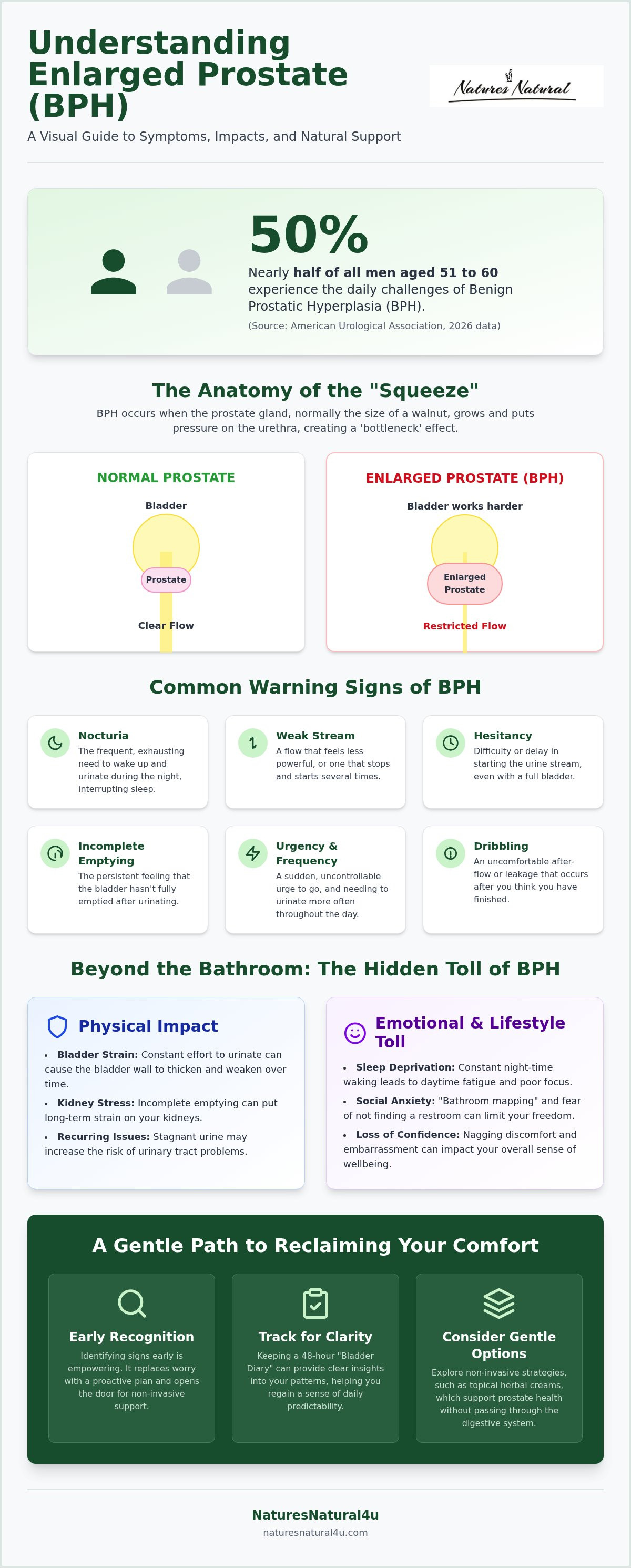
Did you know that as of 2026, data from the American Urological Association shows that nearly 50% of men aged 51 to 60 are already dealing with the daily frustrations of benign prostatic hyperplasia? If you've noticed a sudden change in your bathroom habits, you aren't alone. Identifying enlarged prostate symptoms early is the first step toward reclaiming your quality of life. It’s completely understandable to feel a sense of unease when your sleep is constantly interrupted by nocturia (night-time urination) or when you feel a nagging social anxiety about always being near a restroom.
You likely want a solution that feels supportive rather than clinical, especially if the thought of invasive medical procedures feels overwhelming. We are here to show you that a diagnosis doesn't have to mean a loss of freedom. In this guide, you will learn how to spot the early warning signs and discover how to manage your symptoms with a reassuring, natural approach. We will preview the latest 2026 health guidelines and explore non-invasive ways to achieve lasting COMFORT and better sleep, helping you move from persistent discomfort to a state of total WELLBEING.
Key Takeaways
- Learn to identify the specific physical changes associated with enlarged prostate symptoms, helping you distinguish between normal aging and the manageable signs of BPH.
- Discover how keeping a 48-hour "Bladder Diary" provides the CLARITY needed to track your frequency and regain a sense of daily predictability.
- Understand the hidden emotional toll of sleep deprivation and how reducing night-time interruptions can significantly improve your daytime mood and focus.
- Explore the advantages of using gentle, topical herbal creams (which bypass the digestive system) as a non-invasive way to support your long-term prostate health.
- Gain practical strategies to stop "bathroom mapping" in social settings, allowing you to reclaim your freedom and move through your day with RESTORED confidence.
Understanding the Signs: What Is Benign Prostatic Hyperplasia (BPH)?
Benign Prostatic Hyperplasia, or BPH, is a non-cancerous enlargement that affects millions of men globally. It’s a common part of the journey as we age, yet it often brings a wave of uncertainty when the first changes appear in your daily routine. To understand what’s happening, it helps to visualize the anatomy involved. Your prostate is a small gland (roughly the size of a walnut) located just below the bladder. While it's small, its central location means that even minor changes can have a noticeable impact on your physical comfort. BPH occurs when the prostate grows, naturally putting pressure on the urethra and triggering the enlarged prostate symptoms that can feel so disruptive to your peace of mind. It is vital to remember that while these signs are common, they are simply your body’s way of asking for intentional support and RESTORATION.
The Anatomy of Prostate Enlargement
The reason BPH causes such specific issues lies in how the prostate is positioned within the body. It completely surrounds the urethra, the vital tube that carries urine from the bladder out through the body. As the gland begins to expand (a process often driven by natural shifts in hormones and the simple passage of time), it begins to squeeze this tube. This creates a significant 'bottleneck' effect. Even slight swelling can make the bladder work much harder to push urine through a narrowed opening. This systemic pressure is why you might experience a weaker stream, hesitancy, or a feeling that your bladder hasn't quite emptied. Understanding this physical "squeeze" helps demystify why enlarged prostate symptoms feel the way they do, shifting the focus from worry to proactive management.
Why Early Recognition Matters
Catching these changes early is one of the kindest things you can do for your long-term health. By recognizing the signs now, you can prevent unnecessary strain on your bladder and kidneys; this strain often occurs when the body has to compensate for a restricted flow for too long. There is also a massive psychological benefit to early action. Having a clear name for your discomfort replaces "what if" fears with a concrete plan for WELLBEING. Early intervention is incredibly empowering because it opens the door for non-invasive relief strategies. Instead of waiting for a situation to become urgent or resorting to invasive measures, you can choose a path of gentle, topical support that aligns with your body’s natural rhythms and helps you regain control of your life.
Common Urinary Symptoms: Why Your Flow Is Changing
As the prostate expands, the way you experience your daily and nightly routine begins to shift. These changes aren't just minor inconveniences; they are clear indicators that your system is under stress. Recognizing enlarged prostate symptoms allows you to address the root cause of your discomfort with a sense of clarity and purpose. Most men first notice these four distinct changes in their urinary habits:
- Nocturia: The frequent, exhausting need to wake up and pee during the night, often leaving you drained the next morning.
- Hesitancy: That difficult, lingering moment of waiting for the urine stream to actually start, even when your bladder feels full.
- Weak stream: A flow that feels significantly less powerful than it used to, or one that stops and starts several times.
- Dribbling: The uncomfortable after-flow that occurs once you think you've finished, which can lead to dampness and embarrassment.
The Frustration of Incomplete Emptying
One of the most persistent challenges is that "never quite finished" feeling. This happens because residual urine remains in the bladder even after you've tried to empty it. When the prostate narrows the path, your bladder muscle has to work much harder to push urine through. Over time, this constant effort causes the bladder wall to thicken and become less flexible. This lack of complete clearing isn't just annoying; it can also lead to recurring urinary tract issues as stagnant urine becomes a breeding ground for bacteria. Finding gentle support options early on can help alleviate this strain and protect your long-term bladder health.
Urgency and Frequency
You might also experience a sudden, uncontrollable urge to urinate that forces you to rush to the nearest restroom. This urgency occurs because the bladder becomes overactive as it tries to compensate for the blockage. It essentially becomes "irritable," signaling a need to go even when it isn't full. It’s vital to distinguish this from normal aging. While some change is expected as we get older, enlarged prostate symptoms involve a level of frequency and urgency that disrupts your ability to enjoy social outings or focus on work. Addressing these signals early helps you transition from a state of constant alert back to a life of RESTORED confidence and ease.
Beyond the Bathroom: The Emotional and Lifestyle Impact of BPH
While the physical mechanics of a narrowed urethra are frustrating, the emotional toll of enlarged prostate symptoms is often what feels most heavy. It’s about the subtle loss of freedom that happens when your world begins to shrink around the nearest restroom. Many men find themselves "bathroom mapping," a behavior where you instinctively scan every new room for the exit and the toilet. This constant vigilance creates a layer of background noise in your mind, making it hard to stay present during a dinner with friends or a movie with your partner. You deserve to feel present in your own life again, without the distraction of a ticking clock in your bladder.
Beyond the social anxiety, we must address the quiet impact on confidence and intimacy. When you feel like you've lost control over a basic bodily function, it can ripple into how you view yourself. It’s common to feel a sense of embarrassment that keeps you from seeking help for years, but waiting only prolongs the period of discomfort. True STRENGTH lies in recognizing when your body needs a helping hand and taking proactive steps toward RESTORATION before your quality of life is further diminished.
The 'Hidden' Symptoms of Sleep Loss
Sleep is the foundation of your wellbeing, and waking up 3 to 4 times a night to urinate does more than just make you tired. This level of sleep fragmentation prevents your body from entering the deep, restorative stages of sleep where physical repair happens. Over time, this leads to a specific type of fatigue-related irritability that can strain even the most loving family relationships. You might find your patience wearing thin or your cognitive clarity slipping during important work meetings. There is also a very real physical danger to this daytime grogginess, especially when you are behind the wheel of a car or operating machinery. Regaining those uninterrupted hours of rest is vital for your long-term VITALITY.
Regaining Your Social Freedom
Imagine a life where you don't have to decline a long car ride or worry about the length of a cinema trip. Addressing enlarged prostate symptoms early is the key to restoring your ability to enjoy public life with a sense of ease. When you are no longer tethered to the nearest restroom, you can say yes to the things you love, from hiking trips to long-haul flights. Finding a topical treatment for enlarged prostate offers a discreet way to manage your health without the need for invasive procedures or clinical consultations. This gentle approach allows you to focus on the joy of the moment rather than the location of the next bathroom, moving you closer to the life of freedom you've been missing.
Monitoring Your Progress: How to Track and Assess Your Symptoms
Taking an active role in your health journey starts with focused observation. When you track your enlarged prostate symptoms, you move from a place of uncertainty to one of CLARITY. This isn't just about counting bathroom trips; it's about understanding the unique rhythm of your body. By documenting your experiences over a short period, you can identify exactly what triggers your discomfort and how to adjust your lifestyle for better RESTORATION. Monitoring your progress allows you to see the tangible impact of the positive changes you make every day.
The 48-Hour Bladder Diary
A 'Bladder Diary' is a simple yet powerful tool that acts as a bridge between your lived experience and a concrete plan for wellness. For exactly 48 hours, record every fluid you drink and every trip you take to the bathroom. Note the time of day and provide an estimate of the volume (low, medium, or high). This data helps you see patterns that might otherwise go unnoticed. Are you waking up more often on days you have that extra cup of coffee? Does having a late dinner with spicy food increase your urgency the next morning?
During this 48-hour window, try rating your symptoms on a scale of 1 to 5 for both frequency and urgency. A '1' might represent a calm day with little distraction, while a '5' indicates a day where your schedule was entirely dictated by your bladder. Don't forget to track your 'triggers' as well. Common culprits include:
- Caffeine (coffee, tea, or soda)
- Alcoholic beverages
- Spicy or acidic foods
- Fluid intake within two hours of bedtime
This information is incredibly valuable when you're looking for the right path forward. It helps you decide which lifestyle adjustments will yield the most relief for your specific enlarged prostate symptoms, ensuring your efforts are targeted and effective.
When to Seek Professional Guidance
While natural support is a wonderful way to manage daily comfort, it's essential to recognize when your body needs more immediate attention. Identifying 'red flag' symptoms is a key part of responsible self-care. If you notice blood in your urine, experience significant physical pain, or find yourself totally unable to pee, it's time to consult a healthcare professional immediately. These signs could indicate issues like infections, stones, or a complete blockage that requires clinical intervention.
Obtaining a professional check-up doesn't mean you have to abandon your natural approach. In fact, it often provides the peace of mind needed to pursue gentle care with total confidence. Once you've ruled out acute conditions, you can focus on the non-invasive, systemic support that helps you regain your VITALITY and long-term comfort. Trusting your body means knowing when to seek an expert opinion to ensure your path to health is safe and sustainable.
A Gentle Path Forward: Supporting Prostate Health Naturally
Once you've identified your enlarged prostate symptoms and tracked your triggers, the next step is moving toward active RESTORATION. While traditional paths often focus on invasive measures, a more supportive, natural approach is becoming the preferred choice for many men in 2026. This journey begins with nourishing your body from the inside out and the outside in. Simple dietary shifts, such as incorporating zinc-rich pumpkin seeds or lycopene from cooked tomatoes, provide the systemic nutrients your prostate needs to thrive. The Natural Prostate Treatment Cream offers localized support by delivering herbal ingredients exactly where they are needed most. By choosing these gentle methods, you're prioritizing your long-term WELLBEING without the stress of clinical detachment.
The Benefits of Topical Herbal Support
Topical solutions represent a significant shift in how we manage prostate health. For many men, bypassing the digestive system is simply more comfortable, as it avoids the potential for stomach upset often associated with oral supplements. These creams allow for direct application and rapid absorption, ensuring the purity of the herbal ingredients remains intact. Unlike synthetic alternatives that can feel harsh or clinical, herbal extracts provide a soothing experience that works in harmony with your body’s natural systems. For those seeking a comprehensive approach, we encourage you to view the Prostate Wellbeing Kit for complete systemic care.
Lifestyle Habits for Long-Term Comfort
Your daily habits play a vital role in managing enlarged prostate symptoms and regaining your freedom. Pelvic floor exercises, commonly known as Kegels, aren't just for women; they're a powerful tool for men to improve bladder control and reduce urgency. Pair this physical practice with smart fluid management to see even better results. We recommend drinking the majority of your water during the daylight hours and significantly tapering off your intake after 7 PM to protect your sleep. Finally, never underestimate the power of a positive, proactive mindset. Approaching your health with optimism and a steady hand transforms the healing journey from a burden into a path of empowerment and RESTORED vitality.
Reclaiming Your Freedom and Wellbeing
You now have the tools to move from a place of uncertainty to one of RESTORED confidence. By recognizing enlarged prostate symptoms early and tracking your daily patterns with a bladder diary, you've already taken the most important steps toward long-term comfort. These physical changes are simply your body’s way of asking for gentle, intentional support. You don't have to accept a life of interrupted sleep or social anxiety as an inevitable part of aging.
Our approach focuses on empathetic, expert-backed wellness that prioritizes your individual journey toward health. By choosing non-invasive topical applications made with 100% natural herbal ingredients, you can support your system while bypassing the digestive system for direct relief. This proactive maintenance allows you to regain control and focus on the activities you love most.
You deserve to feel present in every moment of your life. Take this opportunity to embrace a proactive path toward VITALITY and enjoy the peace of mind that comes with holistic, dedicated care.
Frequently Asked Questions
Can enlarged prostate symptoms go away on their own?
Symptoms rarely disappear without some form of intervention because BPH is typically a progressive condition. While you might experience days where the urgency feels less intense, the underlying growth of the prostate continues over time. Taking a proactive approach now is the best way to prevent your discomfort from becoming more restrictive. Early, gentle support helps maintain your quality of life before the symptoms worsen.
Is it normal to pee more often as you get older, or is it BPH?
While minor changes in frequency can occur with age, needing to rush to the bathroom or waking up multiple times a night isn't just "getting older." These are classic signs that the prostate is putting pressure on your bladder. If your bathroom habits are starting to dictate your schedule or disrupt your rest, it's a clear signal that your system needs focused support.
What are the first warning signs of an enlarged prostate I should look for?
The earliest enlarged prostate symptoms are often subtle, such as a slightly weaker stream or a brief hesitation before the urine starts to flow. You might also notice a new, persistent need to visit the bathroom more frequently during the day. Paying attention to these small shifts early on allows you to choose non-invasive paths to restoration before the issues become more disruptive.
How can I reduce my night-time bathroom trips naturally?
Managing your fluid timing is one of the most effective natural strategies. Try to consume the majority of your water during the day and taper off significantly after 7 PM. It's also helpful to avoid bladder irritants like caffeine or alcohol in the evening. These small adjustments help settle an overactive bladder, allowing for the deep, restorative sleep your body needs to thrive.
Can an enlarged prostate affect my ability to fully empty my bladder?
Yes, the physical pressure on the urethra often makes it difficult for the bladder to clear itself completely. This leaves residual urine behind, which is why you might feel the urge to go again shortly after finishing. This "incomplete emptying" is a common frustration, but it can be managed by supporting the health of the prostate and strengthening the pelvic floor muscles.
What happens if I ignore the symptoms of an enlarged prostate?
Ignoring these signs can lead to more serious challenges, such as recurring urinary tract infections or even kidney strain. Over time, the bladder muscle has to work so hard that it can thicken and lose its natural flexibility. Taking action now protects your long-term vitality and ensures that you don't have to face more invasive clinical procedures further down the road.
Is there a non-invasive way to support my prostate without surgery?
Many men find significant relief through topical herbal support and targeted lifestyle changes. Using a specialized cream allows for direct, localized application, which bypasses the digestive system and provides a more comfortable experience than traditional pills. This gentle approach works in harmony with your body’s natural systems to promote systemic wellness and lasting physical comfort without the need for surgery.
Can diet and lifestyle changes really help with BPH symptoms?
Targeted nutrition and daily habits are incredibly powerful tools for managing enlarged prostate symptoms naturally. Incorporating specific minerals like zinc and practicing pelvic floor exercises can help strengthen bladder control and reduce urgency. When you combine a nourishing diet with a positive, proactive mindset, you create a strong foundation for long-term prostate health and a much more active, free lifestyle.