
Enlarged Prostate Exercises: Natural Guide 2026
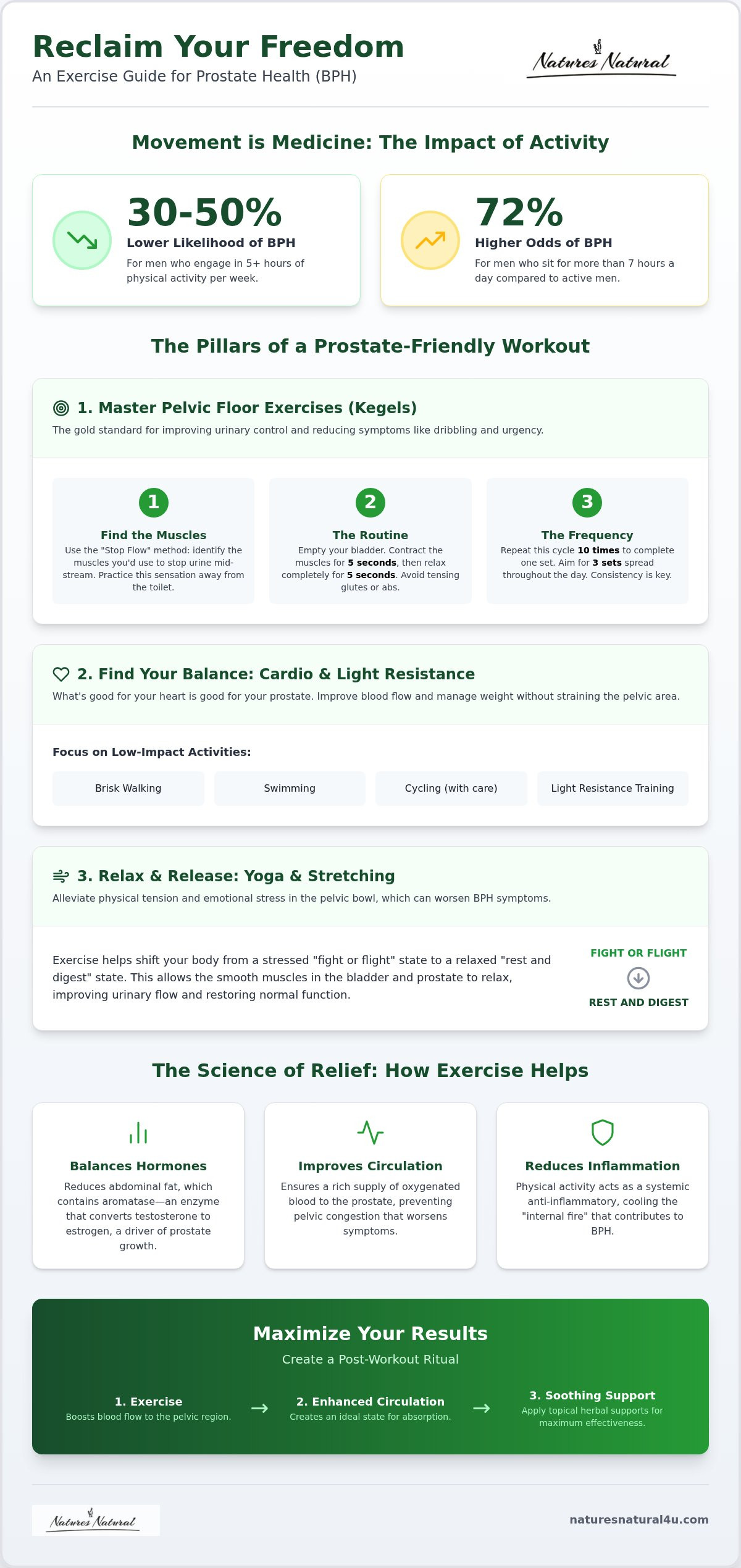
Did you know that men who engage in five or more hours of physical activity each week are 30% to 50% less likely to develop BPH than those who don't? It's a powerful reminder that movement is often the best medicine for a body in transition. We understand the deep frustration of interrupted sleep and the quiet anxiety of always needing to be near a bathroom. If you've been searching for effective exercises for enlarged prostate, you're likely looking for more than just a workout; you're looking for a way to reclaim your FREEDOM and your confidence.
We agree that managing your health should feel empowering rather than clinical or stressful. This guide promises to reveal the most effective, science-backed exercises to manage BPH symptoms and support your prostate health naturally (without the need for invasive procedures). We'll preview everything from pelvic floor strengthening to aerobic routines that improve circulation and reduce prostatic tension. By combining these movements with a supportive system, like our Prostate Wellbeing Kit or a soothing post-exercise application of Natural Prostate Treatment Cream, you can look forward to fewer bathroom trips and the RESTORATION of your sleep quality.
Key Takeaways
- Learn how consistent physical activity helps naturally balance your hormone levels (testosterone and estrogen) to support a healthy prostate volume.
- Discover why specific pelvic floor techniques are the gold standard among exercises for enlarged prostate and how to master the "Stop Flow" method for better urinary control.
- Identify the ideal balance between low-impact cardio and light resistance training to improve your metabolic health without straining the pelvic area.
- Explore how yoga and targeted stretching provide deep myofascial release to alleviate the physical tension and emotional stress often linked to BPH.
- Uncover the benefits of a "Post-Workout Ritual" that uses increased circulation to enhance the effectiveness of soothing topical herbal supports.
How Physical Activity Impacts Benign Prostatic Hyperplasia (BPH)
Understanding the link between your daily movement and your prostate health is the first step toward reclaiming your comfort. While many people view a workout as a way to burn calories, for a man managing Benign Prostatic Hyperplasia (BPH), it serves a much deeper purpose. Regular physical activity acts as a systemic reset, cooling the "internal fire" of inflammation and helping to regulate the very hormones that drive prostate growth. When you commit to specific exercises for enlarged prostate, you aren't just moving your body; you're actively reducing the tension within your pelvic bowl.
One often overlooked factor is the role of your sympathetic nervous system (the "fight or flight" response). When this system is overactive due to stress or a sedentary lifestyle, it causes the smooth muscles in your bladder neck and prostate to tighten. This constriction is what leads to that frustrating, weak urinary stream. Exercise helps shift your body back into a parasympathetic state (the "rest and digest" mode), allowing those muscles to relax and providing much-needed RESTORATION of normal function.
The Cardiovascular-Prostate Connection
There is a simple rule in male wellness: what is good for your heart is almost always good for your prostate. Your prostate relies on a rich supply of oxygenated blood to stay healthy and flexible. Sedentary behavior leads to pelvic congestion, where blood pools in the lower abdomen and creates a stagnant environment that can worsen BPH symptoms. Recent data from the National Institutes of Health suggests that men who sit for more than 7 hours a day have 72% higher odds of BPH compared to those who stay active. By choosing consistent exercises for enlarged prostate, you ensure that blood flows freely through the pelvic area, preventing the buildup of pressure that contributes to nighttime bathroom trips.
Hormonal Balance and Weight Management
Your prostate is highly sensitive to the balance between testosterone and estrogen. Excess abdominal fat isn't just a weight issue; it's a hormonal one. Fat tissue contains an enzyme called aromatase, which converts testosterone into estrogen (a known driver of prostate enlargement). Moderate exercise helps burn this visceral fat and improves insulin sensitivity, which keeps growth-stimulating hormones in check. To support this internal balance, many men find success using a Natural Prostate Treatment Cream as part of their daily routine. This topical support works in harmony with your activity levels to soothe the area and promote long-term vitality and hormonal harmony.
Mastering Pelvic Floor Exercises for Urinary Control
When we discuss exercises for enlarged prostate, Pelvic Floor Muscle Training (PFMT) often takes center stage. These movements, commonly known as Kegels, are the gold standard for managing the most intrusive BPH symptoms (like post-void dribbling and the sudden, frantic urge to go). Strengthening these muscles provides a mechanical "safety net" for the urethra, helping you stay in control of your body. Research into the biological mechanisms of exercise suggests that targeted pelvic movement helps modulate local inflammation and improves the structural integrity of the pelvic bowl. Consistency is far more important than intensity here; it's about re-educating the muscles to support your bladder daily.
Finding these muscles can feel tricky at first. The most effective way is the "Stop Flow" technique. Imagine you're trying to stop the flow of urine mid-stream or trying to prevent the passage of gas. The muscles you feel lifting and squeezing are your pelvic floor. Once you've identified them, don't practice while actually urinating, as this can lead to incomplete bladder emptying. Instead, focus on these sensations during your dedicated practice time to ensure you're targeting the right area for lasting RESTORATION of function.
Step-by-Step Guide to Male Kegels
Before you begin, always empty your bladder to avoid discomfort or accidental leakage. Once you're ready, contract your pelvic floor muscles and hold for a count of five seconds. Follow this with a full five seconds of relaxation (this rest period is just as vital as the contraction). Repeat this cycle ten times, three times a day. Be careful not to "cheat" by squeezing your glutes, thighs, or abdominal muscles. If you find yourself holding your breath, you're likely straining too hard. Keep your breathing steady and your focus internal.
Modified Exercises for Limited Mobility
If standing for long periods is difficult, modified exercises for enlarged prostate offer a path to relief without physical strain. Seated pelvic tilts (gently rocking the pelvis forward and back while sitting in a sturdy chair) provide a low-impact way to engage the area. Lying down "Bridge" variations (lifting the hips slightly off the floor while keeping the shoulders grounded) offer gentle pelvic activation. We recommend a "Pelvic Power Hour" which is actually just a 10-minute daily commitment to these movements. For those looking to support their progress with natural aids, exploring our range of prostate wellness solutions can provide the systemic support your body needs during this transition.
Aerobic vs. Resistance Training: Finding Your Balance
When choosing exercises for enlarged prostate, the goal isn't just to stay active; it's to select movements that support your metabolic health without irritating the pelvic area. Both aerobic and resistance training offer unique benefits for BPH management. Aerobic exercise, like brisk walking, is exceptional for improving cardiovascular health and reducing systemic inflammation. Resistance training, on the other hand, helps maintain lean muscle mass, which is vital for regulating insulin and hormone levels. Striking a balance between these two ensures you're attacking the root causes of prostate growth from multiple angles.
However, it's vital to recognize that some popular activities can act as "prostate irritants." Long-distance cycling is a primary example. The sustained pressure from a bicycle seat on the perineum (the area between the scrotum and anus) can compress the prostate and worsen urinary symptoms. If you love the outdoors, consider a recumbent bike or a specialized "no-nose" saddle to protect your progress. By being mindful of how your body feels during and after movement, you can ensure your routine remains a source of relief rather than a cause of discomfort.
Best Aerobic Activities for BPH
Brisk walking is perhaps the most accessible and effective way to start. Research from the National Institutes of Health in 2025 suggests that walking for just 2 to 3 hours per week is associated with a 25% lower risk of total BPH. It's a low-barrier entry to prostate health that doesn't require expensive equipment. Swimming is another fantastic option, providing full-body engagement and cardiovascular benefits without any direct pelvic pressure. To gauge your intensity, use the "Talk Test." You should be working hard enough to raise your heart rate but still be able to carry on a conversation without gasping for air. This moderate pace is the "sweet spot" for BPH relief.
Safe Resistance Training for Men 50+
Resistance training provides the Systemic Support our brand advocates for by boosting your overall metabolism and stabilizing hormone levels. Focus on large muscle groups like the chest, back, and shoulders. We recommend avoiding heavy squats or leg presses that significantly increase intra-abdominal pressure, as this can put unwanted strain on the bladder and prostate. Instead, use resistance bands for gentle, consistent tension. These bands allow for a wide range of motion and are much easier on the joints, making them one of the safest exercises for enlarged prostate. This approach ensures you build strength while keeping your pelvic health a top priority.
Yoga and Stretching for Pelvic Tension Relief
Living with BPH is often a quiet, stressful journey that creates physical tension you might not even realize you're holding (a common reaction to chronic discomfort). This "guarding" response causes the muscles around the pelvic bowl to tighten, which can restrict blood flow and worsen urinary symptoms. Specific exercises for enlarged prostate, such as restorative yoga, focus on myofascial release (the softening of connective tissue) to provide lasting RELIEF. By intentionally relaxing these areas, you help your body move out of a state of constant alert and into a state of healing and RESTORATION.
Top 3 Yoga Poses for Prostate Health
You don't need to be an expert to benefit from these gentle movements. We recommend starting with these three targeted poses:
- Cobbler’s Pose (Baddha Konasana): This pose is excellent for opening the hips and groin, which encourages better blood flow to the prostate area.
- Hero Pose (Virasana): By gently stretching the thighs and pelvic region, this pose helps in relieving pelvic congestion that often accumulates after long hours of sitting.
- Knee-to-Chest (Apanasana): This movement provides a gentle massage to the internal organs, promoting better circulation and a sense of ease in the lower abdomen.
Integrating these poses into your daily schedule creates a supportive ritual, especially when paired with the comprehensive systemic support found in our Prostate Wellbeing Kit.
Deep Breathing for Bladder Relaxation
Diaphragmatic breathing is a powerful, science-backed tool to lower cortisol levels and quiet the sympathetic nervous system. When your body is stuck in a "Fight or Flight" response, it naturally tightens the muscles around the prostate and bladder neck, making it much harder to maintain a steady urinary stream. These exercises for enlarged prostate work by re-training your nervous system to stay calm, which directly impacts your physical comfort. Just five minutes of dedicated deep breathing before bed can significantly reduce nighttime urgency by calming the nerves that control your bladder.
Maximizing Results: Synergy Between Exercise and Topical Support
While performing your exercises for enlarged prostate is a massive leap toward health, the true transformation happens when you combine movement with systemic, localized support. Physical activity naturally increases your body temperature and heart rate, which in turn boosts blood circulation and opens the pores of your skin. This physiological state creates a unique window of opportunity where your body is most receptive to natural remedies. By applying a soothing herbal solution immediately after your routine, you ensure the active ingredients reach the target area more efficiently, turning a simple workout into a comprehensive healing ritual.
Adopting this multi-layered approach helps shift your mindset from one of managing discomfort to one of active Well-being. We believe that true RESTORATION comes from addressing BPH from the inside out and the outside in. To deepen your understanding of these natural connections, our Prostate Issues E-Book offers a detailed roadmap that perfectly complements your new physical routine. It provides the knowledge you need to feel in control of your body once again, aligning with the latest 2026 urological guidelines that emphasize patient-centered care and individualized wellness plans.
Why Topical Creams Beat Oral Supplements Post-Exercise
Many men rely solely on oral supplements, but these must navigate the long, harsh path through the digestive tract before they ever reach the prostate. This process often leads to digestive degradation, where the potency of the herbal ingredients is significantly reduced. In contrast, topical application to the perineal area (the space between the scrotum and anus) allows for direct, localized relief. After engaging in exercises for enlarged prostate, the skin in this region is primed for absorption. The all-natural ingredients provide an immediate soothing effect, cooling inflammation and supporting the delicate tissues without the systemic side effects often associated with heavy pharmaceuticals.
Your 2026 Daily Prostate Wellness Routine
Consistency is your most powerful ally. We've designed this simple, effective routine to help you integrate your new habits into your 2026 lifestyle without feeling overwhelmed:
- Morning: Start with gentle stretching (like the Cobbler’s Pose mentioned in earlier sections) and focus on hydration to flush your system.
- Mid-day: Take a 20-minute brisk walk and perform a set of Kegels. These are the core exercises for enlarged prostate that maintain muscle tone and urinary control.
- Evening: End your day with a "Post-Workout Ritual." Apply the Natural Prostate Treatment Cream and practice five minutes of diaphragmatic breathing to calm your nervous system before sleep.
This steady, methodical approach ensures that every step you take brings you closer to better sleep quality and a life no longer dictated by the nearest bathroom. You have the tools; now, it's time to embrace the OPTIMISM of a healthier future.
Reclaim Your Vitality and Control
You've taken the first step toward a more comfortable future by learning how movement impacts your internal health. Mastering pelvic floor techniques and balancing low-impact cardio are powerful tools for managing BPH symptoms naturally. By integrating specific exercises for enlarged prostate into your daily rhythm, you're choosing a path of proactive maintenance rather than passive discomfort.
True success often comes from a multi-layered approach that supports your body from every angle. Our solution-oriented offerings are designed for long-term prostate maintenance, providing you with an all-natural, herbal formula that works in harmony with your active lifestyle. This synergy between your physical efforts and targeted, easy topical application is what leads to lasting RESTORATION and the better sleep quality you deserve.
We're dedicated to helping you move from a state of anxiety to one of total confidence. You have the knowledge and the tools to succeed; now it's time to enjoy the freedom of a body that feels like yours again.
Frequently Asked Questions
Can exercise really shrink an enlarged prostate?
Exercise helps manage symptoms and may slow progression by regulating hormone levels and reducing systemic inflammation. While it might not drastically "shrink" the gland in a clinical sense, it significantly reduces the pressure and tension that lead to urinary issues. Consistent movement supports the RESTORATION of a healthy pelvic environment, which is the ultimate goal of any natural wellness plan.
How long does it take to see results from prostate exercises?
You should expect to see a noticeable difference in your symptom control within 6 to 12 weeks of consistent effort. Strengthening the pelvic floor is much like training any other muscle group; it requires patience and a steady routine. Many men report a significant reduction in nighttime bathroom trips after just a few months of performing daily exercises for enlarged prostate.
What exercises should I avoid if I have an enlarged prostate?
You should avoid activities that put direct pressure on the perineum (the area between the scrotum and anus) or significantly increase intra-abdominal strain. Long-distance cycling on traditional, narrow saddles is a primary example of a "prostate irritant" that can worsen symptoms. Additionally, very heavy weightlifting can put unwanted pressure on the bladder, so it's better to focus on moderate resistance.
Are Kegel exercises for men different from those for women?
The underlying mechanics are similar, but the cues used to identify the muscles are specific to male anatomy. For men, the focus is often on the sensation of lifting the scrotum or "pulling in" the muscles used to stop the passage of gas. These movements target the same pelvic floor foundation as female Kegels, providing the structural support needed for better urinary control.
Can walking 30 minutes a day help with BPH symptoms?
Walking for 30 minutes a day is one of the most effective habits you can adopt for BPH management. According to 2025 research from the National Institutes of Health, men who walk for 2 to 3 hours per week enjoy a 25% lower risk of total BPH. This low-impact movement prevents pelvic congestion and serves as one of the best exercises for enlarged prostate due to its accessibility.
Is cycling bad for an enlarged prostate?
Traditional cycling can be problematic because the narrow saddle puts intense pressure on the prostate and surrounding nerves. If you're a passionate cyclist, don't feel you have to give it up entirely. Consider switching to a recumbent bike or using a "no-nose" saddle (which distributes weight to the sit-bones) to protect your pelvic health while maintaining your cardiovascular fitness.
How often should I do pelvic floor exercises for the best results?
We recommend performing your pelvic floor routine three times a day for the most reliable results. Each session should consist of about ten repetitions of the "contract and relax" cycle. Keeping your practice methodical and purposeful ensures the muscles remain toned and responsive, which is essential for reducing post-void dribbling and sudden urgency throughout your day.
Can I use a prostate cream while following an exercise program?
Using a natural solution alongside your physical routine is a highly effective way to maximize your results. Applying our Natural Prostate Treatment Cream after your workout is the ideal ritual, as increased circulation makes your skin more receptive to herbal ingredients. This multi-layered approach ensures your body receives both the mechanical benefits of movement and the systemic support of natural botanicals.